Skip to content
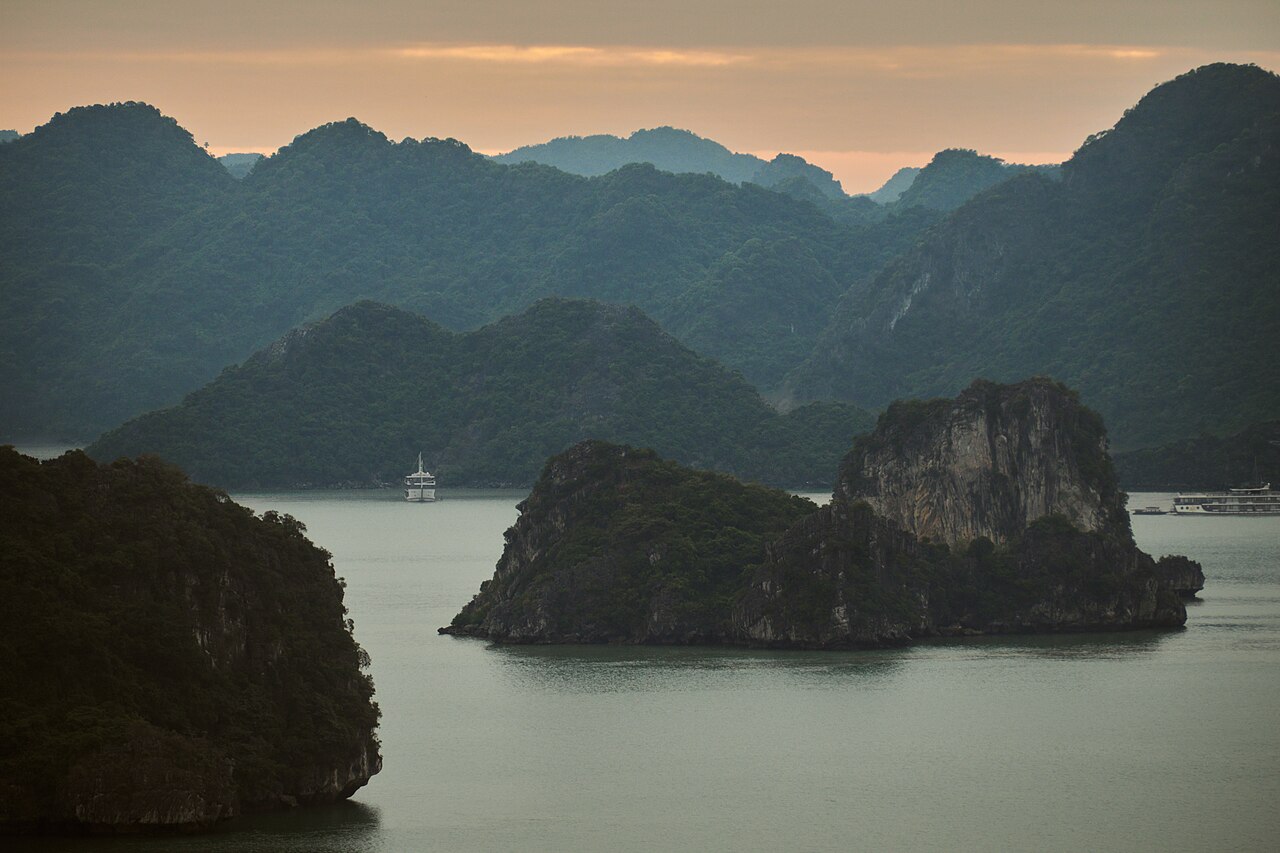
The forested limestone karst islands of Ha Long Bay rising from calm water at dusk in northern Vietnam, with a cruise boat among them

Prepare for your trip to Vietnam.

A fast-growing Southeast Asian republic stretching from Hanoi and the limestone seascape of Ha Long Bay, through imperial Hue, to buzzing Ho Chi Minh City and the Mekong Delta — with cool northern highlands of rice terraces and ethnic-minority villages. Warm, safe and rewarding to travel, with a notably large Christian minority, a one-party political system and a few genuine red lines. Your briefing covers what changes the trip: entry by passport (easy — e-visa for all), staying connected, and Vietnamese custom.

Free to explore. No sign-in needed.
Region
Southeast Asia · a one-party socialist republic
Capital
Hanoi
Languages
Vietnamese (official) · Tay, Thai, Muong, Khmer, Hmong, Nung and many other ethnic-minority languages · English (growing in tourism and business); some French and Chinese
Entry
Depends on your passport

Travel advisory · UK Foreign, Commonwealth & Development Office

The UK FCDO does not advise against travel to Vietnam, which is generally safe and welcoming for visitors. The main risks are petty crime and scams (bag-snatching from motorbikes in cities, taxi and booking scams), very strict drug laws (possession or trafficking can carry long sentences or the death penalty), a tropical-storm season (roughly May to November) with flooding and disruption, and road-traffic accidents. As a one-party state, Vietnam does not tolerate public criticism of the government or Communist Party, or unauthorised political or religious activity. This is a foreign-government advisory; check the latest advice before travel.

Reviewed 31 Oct 2026 · FCDO advice was last updated 21 Sep 2026 and was still current at 31 Oct 2026. There is no advise-against-travel warning; the dominant risks are scams/petty crime, drug laws, storms/road safety and the one-party political environment rather than violence against tourists.

Read the current advice

Do I need a visa for Vietnam?

Entry is easy and verified: Vietnam's e-Visa is open to citizens of ALL countries (apply at evisa.gov.vn — up to 90 days, single or multiple entry). Citizens of 12 countries (the UK, Germany, France, Italy, Spain, Russia, Japan, South Korea and the Nordics) are visa-free for 45 days to March 2028; ASEAN neighbours get bilateral exemptions; and Phu Quoc island is 30-day visa-free for everyone arriving directly.

Which passport will you use?

Choose your passport country, not your country of residence.

No name, passport number or document upload.

Passport not selected

Your entry context starts here

Choose a passport and this shows your real, sourced entry status for Vietnam — verified, provisional or verification-required — straight from the engine.

What should I verify before I travel?
Apply for the e-Visa only on the official government portal (evisa.gov.vn) — many look-alike sites overcharge. Carry a passport valid at least six months. Confirm your nationality's pathway (e-Visa, 45-day exemption, or ASEAN deal) before travel. The final decision on admission rests with immigration.
Why does Trefeo show "verification required"?
Trefeo keeps sourced destination context separate from passport-specific rules that still need confirmation. Selecting a passport should never turn an unverified rule into a verified requirement, so Trefeo holds it at "verification required" until it's confirmed against an authoritative source.

The karsts.
A one-party republic.
Your context.

Vietnam is friendly, cheap and endlessly rewarding — getting in is easy (an e-visa open to everyone) — but it's a one-party state with real limits on politics and religion, strict drug laws, and online monitoring. What matters depends on your passport and where you're going, so this is built to skim.

Staying connected in Vietnam

Connectivity is good and cheap — fast 4G/5G nationwide (Viettel, Vinaphone, MobiFone) and an easy tourist SIM or eSIM. But Vietnam is rated Not Free: assume monitoring, keep public criticism of the government or Party off your accounts, and be aware content controls are tightening. The internet works fine for everyday travel — the issue is political speech, not access.

Mobile networksViettel · Vinaphone · MobiFone
The one ruleNo public criticism of the state/Party online — assume monitoring
Digital conditions · sourced
Internet freedomhigh

Vietnam is rated 'Not Free' both overall (Freedom in the World 2025, 20/100) and online (Freedom on the Net, 22/100) — a one-party state that censors content, pressures platforms and arrests bloggers and activists for online dissent.

Online speechhigh

Assume monitoring. Keep public criticism of the government or Communist Party, and politically or religiously sensitive material, off your accounts while in-country; new content-management rules tighten platform controls.

Connectivitylow

Good, cheap 4G/5G nationwide (Viettel, Vinaphone, MobiFone) and widespread Wi-Fi; a tourist SIM or eSIM is easy with a passport.

Personal VPNsmoderate

VPNs are widely used and not generally blocked, but the environment is restrictive — install and test a reputable VPN before arrival and use it discreetly for sensitive sign-ins.

Public Wi-Filow

Wi-Fi is common in hotels and cafes; use a VPN for sensitive sign-ins as anywhere, and assume networks may be monitored.

Scams & fraudmoderate

Watch for booking, taxi and tour scams, and only buy your e-Visa from the official portal (evisa.gov.vn) — look-alike sites overcharge.

Digital conditions from Freedom House · reviewed 31 Oct 2026. Per-item sources shown by severity (Freedom House, UK FCDO, editorial).
Mission context

Vietnam is unusual in the region for a notable, historic Christian presence — around 9% of the population are Christian adherents, including one of Asia's larger Roman Catholic communities and a Protestant church growing especially among ethnic-minority peoples. Yet evangelical believers are still a small share (around 1.4%), the majority Kinh are minimally reached, and several minority peoples remain unreached. The state tightly regulates religion; registered activity is allowed but unregistered groups (notably Montagnard and Hmong Christians) face real pressure, so relationships, cultural fluency and discretion matter.

People groupsMany · ethnic-minority peoples least-reached
Evangelical~1.4% (Joshua Project estimate)
Christian adherents~9.4% (large Catholic minority)
Primary languageVietnamese
Explore mission-focused context
Joshua Project records many people groups in Vietnam, with numerous ethnic-minority peoples still least-reached. It estimates around 1.4% evangelical and about 9.4% Christian adherents overall. The majority Kinh (Vietnamese), around 85 million, are a 'minimally reached' Buddhist/folk-religion people; the church is proportionally stronger among several highland minorities, some of whom face state pressure.
Joshua Project

People-group figures are Joshua Project estimates, used with attribution. Complements — does not replace — dedicated research platforms. Vietnam has a sizeable Catholic and growing Protestant presence under tight state regulation; engagement is relational and discreet, mindful of pressure on unregistered minority churches. · reviewed 31 Oct 2026.

Local customs and etiquette in Vietnam

Vietnam runs on Confucian respect and harmony, a rich faith life under a tightly-regulating state, and a proud national story. There's etiquette around politics, religion and 'face', plus harsh drug laws. Read the notes that fit your trip.

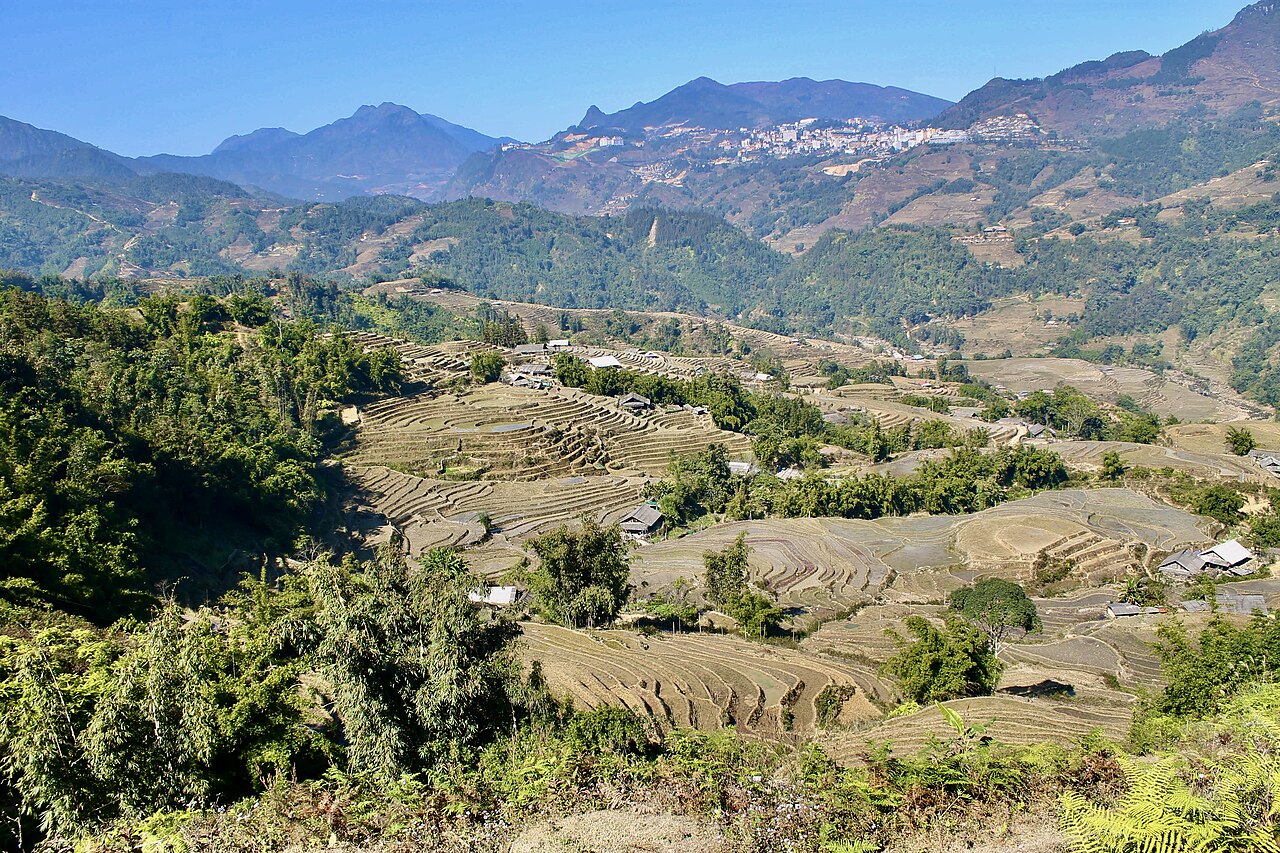
Terraced rice fields descending a green mountain valley near Sa Pa in the northern highlands of Vietnam, with the hill town visible in the distance under a blue sky
Sa Pa · the rice terraces of the northern highlands
A one-party state — what not to do
Vietnam is a one-party communist state with tightly managed media, and it does not tolerate public criticism of the government, the Communist Party or its leaders, or unauthorised political or religious activity. For a visitor the rules are simple: don't debate or criticise the government/Party, don't deface currency or images of Ho Chi Minh, keep sensitive commentary off social media (assume monitoring), and don't distribute political or religious materials. Photographing military or security installations is also unwise. None of this dampens an ordinarily warm, safe trip — it's about staying clear of the few genuine red lines.Source: UK Foreign, Commonwealth & Development Office
Faith, ancestors and discretion
Religious life is rich — folk and ancestral practice, Mahayana Buddhism, one of Asia's larger Catholic communities and a growing Protestant church, especially among highland minorities. Temples, pagodas and incense-filled family altars are everywhere. Dress modestly and remove your shoes to enter, be quiet and respectful, and ask before photographing worshippers. Religion is tightly regulated by the state: registered worship is allowed, but unregistered groups — notably some Montagnard and Hmong Christians — face pressure, so be discreet and never do anything that could expose a local believer to risk.Source: U.S. Department of State
Face, history and everyday warmth
Vietnamese culture is Confucian-influenced and collectivist: it prizes harmony, respect for elders and 'saving face', so stay calm and polite and avoid public confrontation. The 20th-century wars are a deep part of national memory, told from a Vietnamese perspective — engage that history with humility rather than lecturing. In daily life, Vietnam is entrepreneurial and fast-moving: bargain good-naturedly in markets, take real care on the roads and motorbikes, enjoy the street food and hospitality, and meet the country's warmth and pride with respect.Source: Travel Readiness Engine

The one-party-state and drug-law notes draw on UK FCDO travel advice for Vietnam. Contains public sector information licensed under the Open Government Licence v3.0.

Reviewed 31 Oct 2026. Cross-cultural guidance authored by the mission-readiness team, awaiting review by local partners. Broad contextual tendencies that vary by individual and setting — not rules about how any person will behave. The political and drug-law cautions are deliberately foregrounded for traveller safety.

Your readiness plan

Once you've built a plan, this becomes your personal, checkable preparation for Vietnam — the same engine behind every Trefeo briefing, honest about what still needs verifying.

Personal readiness · free

Build your free plan to see what this trip asks of you.

Add your passport and the devices you'll carry — no sign-in needed — and this turns into a personal, checkable readiness plan for Vietnam: entry, accounts, devices, connectivity, culture and emergency, starting at 0% until you work through it.

Sources & licences

Every fact on this page is traceable. Each section above links its own source and review date; the full list is below.

  • Freedom House viewDigital-rights research

    Vietnam: Freedom on the Net · © Freedom House; noncommercial use with citation, commercial by permission

  • Joshua Project viewMission research

    Vietnam — people groups, languages and religions · Free to use with attribution; NON-COMMERCIAL

  • Travel Readiness EngineTrefeo editorial

    Editorial guidance (mission-readiness team)

  • U.S. Department of State viewOfficial government

    2023 Report on International Religious Freedom: Vietnam · Public domain (U.S. Government work, 17 U.S.C. §105)

  • UK Foreign, Commonwealth & Development Office viewGovernment travel advisory

    Foreign travel advice: Vietnam · Open Government Licence v3.0