Skip to content
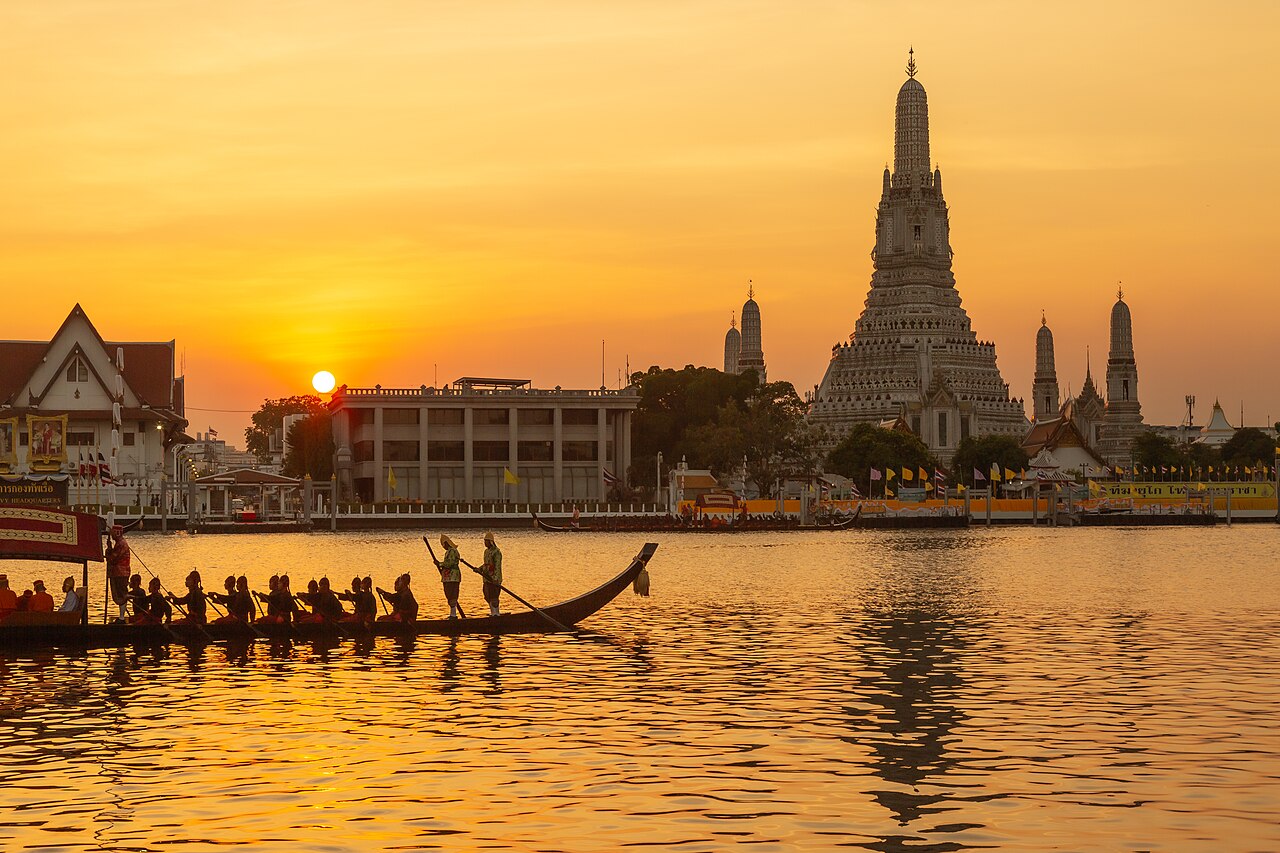
The white porcelain-tiled prang towers of Wat Arun, the Temple of Dawn, silhouetted against a golden sunset over the Chao Phraya River in Bangkok, with a traditional long-boat in the foreground

Prepare for your trip to Thailand.

A Southeast Asian kingdom of golden temples, tropical islands, a mountainous north and the mega-city of Bangkok — one of the world's most-visited countries, warm, welcoming and easy to travel. Theravada Buddhism and a deeply revered monarchy shape public life; most of the country is safe and tourist-ready, with a long-running insurgency in the far south and periodic Cambodia-border tension to avoid. Your briefing covers what changes the trip: entry by passport (just changed), staying connected, and Thai custom.

Free to explore. No sign-in needed.
Region
Southeast Asia · a Buddhist kingdom
Capital
Bangkok
Languages
Thai (Central Thai, official) · Isan (northeast), Kham Muang (Northern Thai), Southern Thai, Malay (far south) and many hill-tribe languages · English (used in tourism and business)
Entry
Depends on your passport

Travel advisory · UK Foreign, Commonwealth & Development Office

The UK FCDO does not advise against travel to most of Thailand — Bangkok, the main islands and the north are heavily visited and generally safe. It DOES advise against all but essential travel to the far-southern provinces of Pattani, Yala and Narathiwat and parts of Songkhla (a long-running separatist insurgency with regular attacks), and to within 20km of the Thailand-Cambodia border, where armed clashes occurred in 2025, crossings are suspended and there is a landmine risk. Elsewhere the practical risks are seasonal flooding, road-traffic accidents (a leading cause of injury), scams, strict drug laws and the lèse-majesté law. This is a foreign-government advisory; check the latest advice before travel.

Reviewed 31 Oct 2026 · FCDO advice was last updated 12 Oct 2026 and was still current at 31 Oct 2026. The firm restrictions are the far-southern provinces and the 20km Cambodia-border strip; elsewhere the dominant risks are road accidents, flooding, scams, drug laws and the lèse-majesté law rather than violent crime against tourists.

Read the current advice

Do I need a visa for Thailand?

Thailand's visa-exemption scheme changed on 15 September 2026: the tourist visa exemption is now 30 days (cut from 60) for about 60 countries — including the US, UK, all EU, Canada, Australia, New Zealand, Japan and India. A few get 15 or 14 days; some keep 30 or 90 days under bilateral deals (China, South Korea); others get a 15-day visa on arrival or an e-Visa. Because the list was just revised and isn't cleanly published yet, this section is provisional — confirm your status.

Which passport will you use?

Choose your passport country, not your country of residence.

No name, passport number or document upload.

Passport not selected

Your entry context starts here

Choose a passport and this shows your real, sourced entry status for Thailand — verified, provisional or verification-required — straight from the engine.

What should I verify before I travel?
Confirm your nationality's current visa-exemption, visa-on-arrival or e-Visa terms with the Thai MFA (mfa.go.th) — the scheme changed on 15 Sep 2026 and ~21 nationalities now need a visa. ALL arrivals must complete the Thailand Digital Arrival Card (TDAC) online before entry; carry a passport valid 6 months and proof of onward travel. The final decision on admission rests with immigration.
Why does Trefeo show "verification required"?
Trefeo keeps sourced destination context separate from passport-specific rules that still need confirmation. Selecting a passport should never turn an unverified rule into a verified requirement, so Trefeo holds it at "verification required" until it's confirmed against an authoritative source.

The temples.
A Buddhist kingdom.
Your context.

Thailand is friendly, affordable and endlessly rewarding — but the visa rules just changed, the monarchy is a legal red line (lèse-majesté), drug laws are harsh, and a couple of areas are off-limits. What matters depends on your passport and where you're going, so this is built to skim.

Staying connected in Thailand

Connectivity is excellent and cheap — fast 4G/5G nationwide (AIS, True, dtac) and a tourist SIM or eSIM is easy at the airport. The internet is generally usable, but Thailand is rated Not Free: the one serious digital risk is the LÈSE-MAJESTÉ law — any post, share or 'like' that insults or criticises the monarchy is a criminal offence with long prison sentences, for foreigners too. Avoid the subject of the monarchy entirely, online and off.

Mobile networksAIS · True · dtac
The one ruleNever post/share anything touching the monarchy — lèse-majesté is a serious crime
Digital conditions · sourced
Internet freedommoderate

Thailand is rated 'Not Free' online by Freedom House, and Freedom in the World 2025 downgraded the country to Not Free (34/100). The internet is generally usable for travellers, but content touching the monarchy is heavily policed.

Lèse-majesté onlinehigh

The single serious digital risk: any post, share or 'like' that insults or criticises the King, Queen, heir or regent is a criminal offence (Article 112) carrying long prison sentences — this applies to foreigners too. Never post, share or engage with anything touching the monarchy.

Connectivitylow

Excellent, cheap 4G/5G nationwide (AIS, True, dtac) and widespread Wi-Fi; a tourist SIM or eSIM is easy at the airport with a passport.

Personal VPNslow

VPNs are legal and commonly used; use one on public Wi-Fi as normal good practice.

Public Wi-Filow

Wi-Fi is common in hotels, cafes and transport; use a VPN for sensitive sign-ins as anywhere.

Scams & fraudmoderate

Online and in-person scams targeting tourists are common (fake tour/transport operators, rental-damage and gem scams, romance/investment fraud). Book through reputable operators and be cautious with deposits.

Digital conditions from Freedom House · reviewed 31 Oct 2026. Per-item sources shown by severity (Freedom House, UK FCDO, editorial).
Mission context

Thailand is one of the larger less-reached Buddhist nations: Theravada Buddhism is woven into identity and daily life, and evangelical believers are a small fraction (around 0.7%), with the church concentrated among some hill-tribe and ethnic-minority peoples more than the majority Central Thai. Engagement is legal and relatively open, but conversion from Buddhism is culturally weighty; relationships, patience, cultural fluency and respect for Buddhist and royal sensibilities matter.

People groups~109 total · 72 unreached
Evangelical~0.7% (Joshua Project estimate)
Primary languageThai
Progress levelUnreached (Buddhist majority)
Explore mission-focused context
Joshua Project lists about 109 people groups in Thailand, 72 of them unreached (roughly two-thirds). It estimates around 0.7% evangelical overall and a small Christian minority. The largest group is the Central Thai; the church is proportionally stronger among several northern hill-tribe peoples than among the lowland Thai Buddhist majority.
Joshua Project

People-group figures are Joshua Project estimates, used with attribution. Complements — does not replace — dedicated research platforms. Thailand is an open but strongly Buddhist society; fruitful engagement is long-term, relational and respectful of Buddhist and royal sensibilities. · reviewed 31 Oct 2026.

Local customs and etiquette in Thailand

Thailand runs on Theravada Buddhism, deep reverence for the monarchy, and an easygoing, face-saving warmth. There's real etiquette around temples, the monarchy, and the head/feet, plus harsh drug laws. Read the notes that fit your trip.

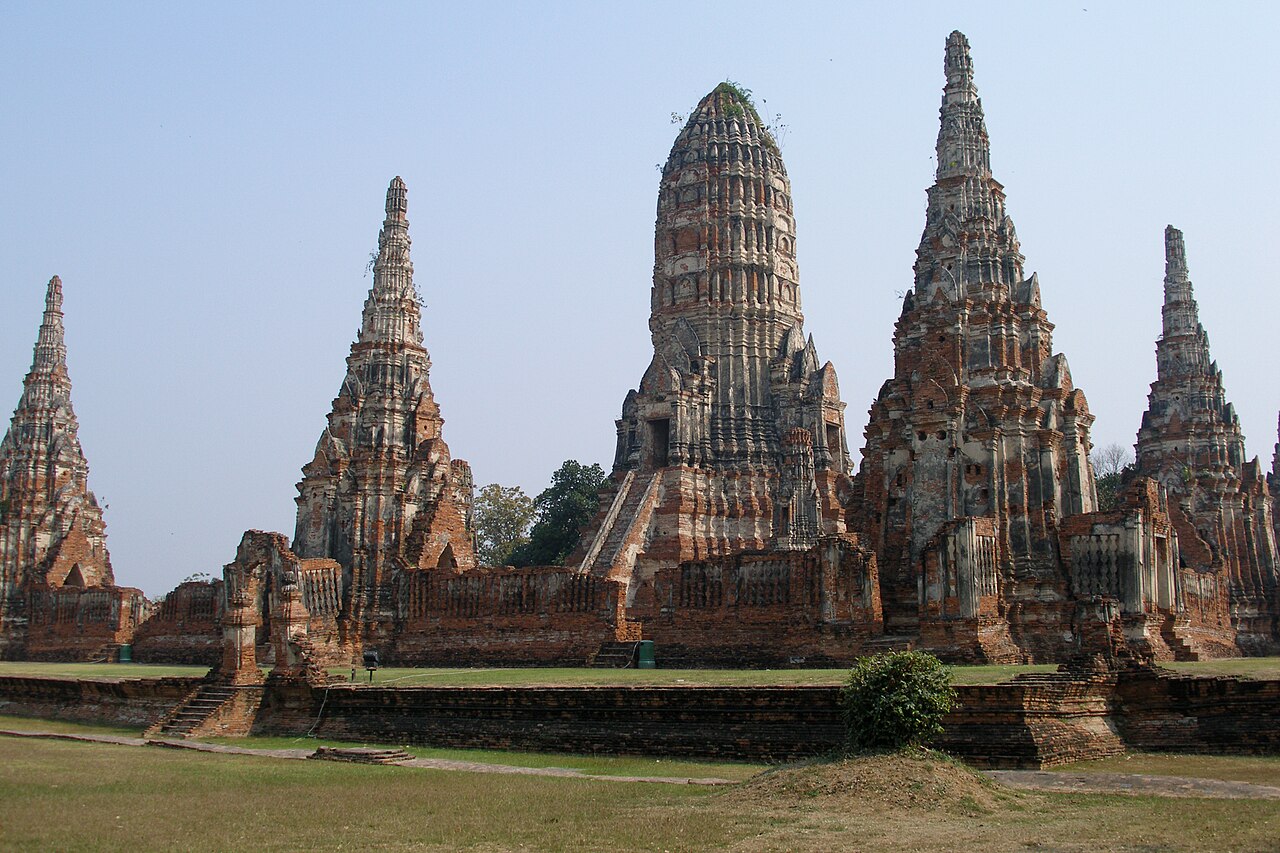
The weathered brick prang towers of Wat Chaiwatthanaram, an ancient Khmer-style Buddhist temple ruin in the Ayutthaya Historical Park, against a pale blue sky
Ayutthaya · the prang towers of Wat Chaiwatthanaram
The monarchy and the lèse-majesté law
Respect for the Thai King and royal family is profound and legally protected: criticising, insulting or mocking the monarchy — in person or online, including sharing or liking others' posts, and defacing money or images bearing the King's likeness — is a serious criminal offence (Article 112) that has brought long prison sentences, foreigners included. Stand respectfully when the royal and national anthems are played (the anthem sounds twice daily in public places). The safest course is to avoid the subject of the monarchy entirely, online and in conversation.Source: UK Foreign, Commonwealth & Development Office
Buddhism, temples and everyday etiquette
Theravada Buddhism shapes daily life, and temples, monks and Buddha images are sacred. Dress modestly to enter a wat (cover shoulders and knees), remove your shoes, and never point your feet at — or climb on — a Buddha image. The head is the most sacred part of the body and the feet the lowest: don't touch people's heads or point your feet at people or images. Women must never touch a monk or hand something to him directly. Greet with a 'wai' (palms together), stay calm and smiling in any dispute (losing your temper causes loss of face), and enjoy the Thai sense of 'sanuk' — fun — within these bounds of respect.Source: U.S. Department of State
Staying safe: drugs, roads and the areas to avoid
Most of Thailand is safe and tourist-ready, but a few things matter. Drug laws are harsh — never carry drugs across a border (including cannabis, even though it's decriminalised for some domestic uses), as trafficking can carry the death penalty. Road-traffic accidents are a leading cause of injury, so take care on motorbikes. Watch for scams (tours, rentals, gems). And heed the FCDO advice against travel to the far-southern provinces (Pattani, Yala, Narathiwat, parts of Songkhla) and within 20km of the Cambodia border, where there has been fighting, suspended crossings and a landmine risk.Source: UK Foreign, Commonwealth & Development Office

The lèse-majesté, drug-law and travel-restriction notes draw on UK FCDO travel advice for Thailand. Contains public sector information licensed under the Open Government Licence v3.0.

Reviewed 31 Oct 2026. Cross-cultural guidance authored by the mission-readiness team, awaiting review by local partners. Broad contextual tendencies that vary by individual and setting — not rules about how any person will behave. The lèse-majesté and drug-law cautions are deliberately foregrounded for traveller safety.

Your readiness plan

Once you've built a plan, this becomes your personal, checkable preparation for Thailand — the same engine behind every Trefeo briefing, honest about what still needs verifying.

Personal readiness · free

Build your free plan to see what this trip asks of you.

Add your passport and the devices you'll carry — no sign-in needed — and this turns into a personal, checkable readiness plan for Thailand: entry, accounts, devices, connectivity, culture and emergency, starting at 0% until you work through it.

Sources & licences

Every fact on this page is traceable. Each section above links its own source and review date; the full list is below.

  • Freedom House viewDigital-rights research

    Thailand: Freedom on the Net · © Freedom House; noncommercial use with citation, commercial by permission

  • Joshua Project viewMission research

    Thailand — people groups, languages and religions · Free to use with attribution; NON-COMMERCIAL

  • Travel Readiness EngineTrefeo editorial

    Editorial guidance (mission-readiness team)

  • U.S. Department of State viewOfficial government

    2023 Report on International Religious Freedom: Thailand · Public domain (U.S. Government work, 17 U.S.C. §105)

  • UK Foreign, Commonwealth & Development Office viewGovernment travel advisory

    Foreign travel advice: Thailand · Open Government Licence v3.0