Skip to content
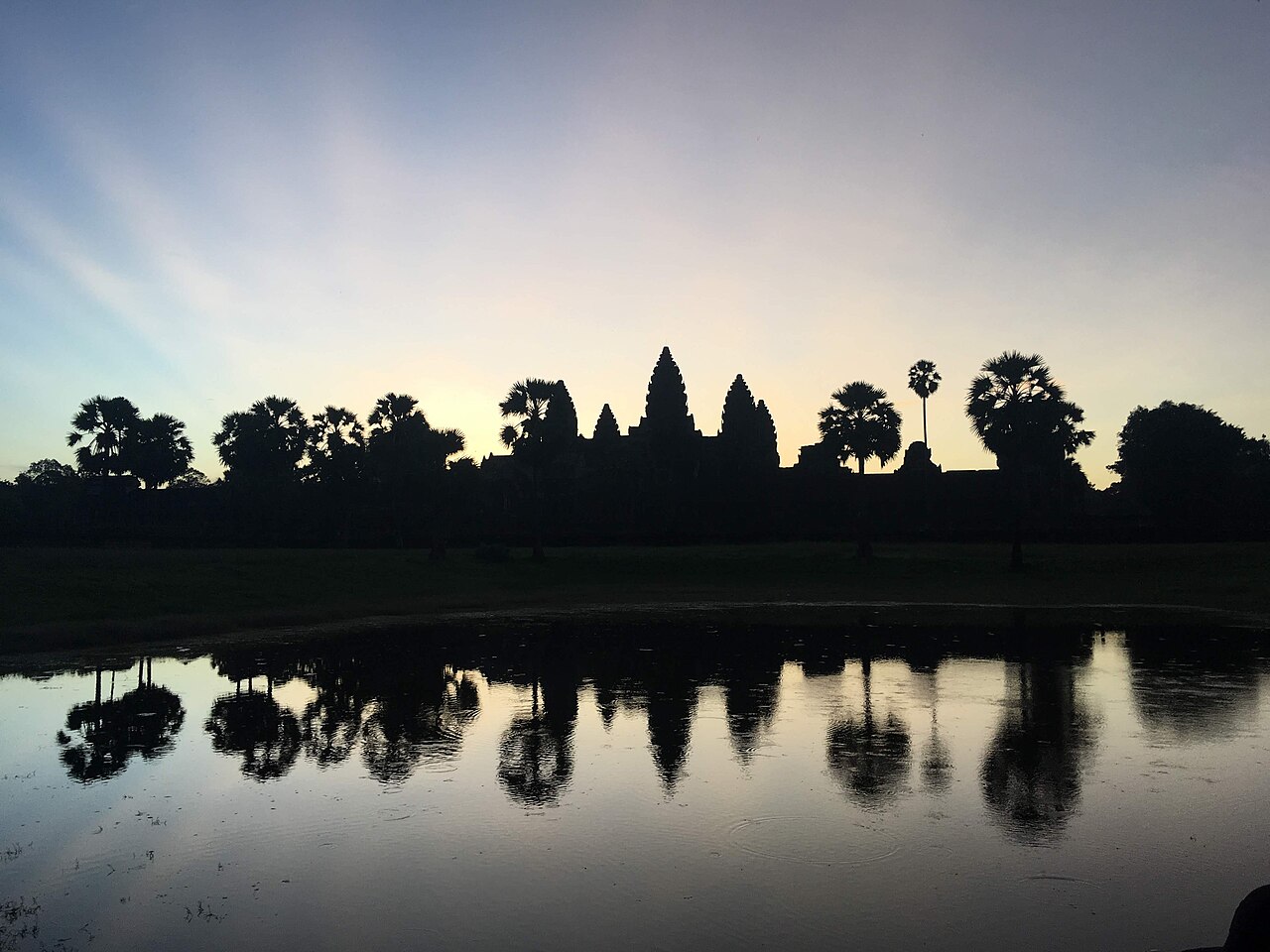
The five-tower silhouette of Angkor Wat against the glow of dawn, reflected in the temple pond with palm trees, in Cambodia

Prepare for your trip to Cambodia.

A Southeast Asian kingdom on the Mekong, home to the extraordinary temples of Angkor and a warm, resilient people — and the heavy memory of the Khmer Rouge genocide. Welcoming and rewarding to travel (Siem Reap, Phnom Penh, the coast), under long one-party rule, with a tense Thailand-border zone to avoid and a serious, current scam/trafficking problem to be aware of. Your briefing covers what changes the trip: entry by passport, staying safe online, and Khmer custom.

Free to explore. No sign-in needed.
Region
Southeast Asia · the kingdom of Angkor
Capital
Phnom Penh
Languages
Khmer (official) · Cham, Vietnamese and Chinese (minorities) · English and some French (used in tourism and business)
Entry
Depends on your passport

Travel advisory · UK Foreign, Commonwealth & Development Office

The UK FCDO advises against all but essential travel to within 20km of the Thailand land border, after heavy fighting in 2025 and a December 2025 ceasefire that remains tense — land crossings are suspended, several border temples are closed, and there is a landmine and unexploded-ordnance risk. Elsewhere, two things stand out. First, a serious, current SCAM/TRAFFICKING problem: people are lured by fake job offers and then held and forced to work in illegal online-scam compounds — never accept unsolicited or too-good-to-be-true job offers. Second, the everyday risks: petty crime and bag-snatching, strict drug laws, road-traffic accidents, and landmines off marked paths in rural areas. Most tourist travel (Siem Reap, Phnom Penh, the coast) is otherwise straightforward. This is a foreign-government advisory; check the latest advice before travel.

Reviewed 31 Oct 2026 · FCDO advice was last updated 19 Mar 2026 and was still current at 31 Oct 2026. The firm restriction is the 20km Thailand-border strip; the stand-out safety issue elsewhere is the scam/trafficking compounds, alongside petty crime, drug laws, road safety and landmines off marked paths.

Read the current advice

Do I need a visa for Cambodia?

Entry is verified and straightforward for most: ASEAN neighbours are visa-free (~30 days), and most other nationalities get a 30-day visa on arrival (at major airports and some land borders) or an e-Visa online (evisa.gov.kh). Ten nationalities (Afghanistan, Algeria, Bangladesh, Iran, Iraq, Nigeria, Pakistan, Saudi Arabia, Sri Lanka, Sudan) must get a visa in advance from an embassy. All travellers also submit the Cambodia e-Arrival declaration.

Which passport will you use?

Choose your passport country, not your country of residence.

No name, passport number or document upload.

Passport not selected

Your entry context starts here

Choose a passport and this shows your real, sourced entry status for Cambodia — verified, provisional or verification-required — straight from the engine.

What should I verify before I travel?
Confirm your nationality's pathway (ASEAN exemption / visa on arrival / e-Visa / embassy visa) and the accepted entry points on evisa.gov.kh, and submit the e-Arrival declaration before arrival. Carry a passport valid six months with a blank page (and the ~US$30-35 fee and a photo for visa on arrival). The final decision on admission rests with immigration.
Why does Trefeo show "verification required"?
Trefeo keeps sourced destination context separate from passport-specific rules that still need confirmation. Selecting a passport should never turn an unverified rule into a verified requirement, so Trefeo holds it at "verification required" until it's confirmed against an authoritative source.

Angkor.
A resilient kingdom.
Your context.

Cambodia is warm, affordable and rewarding — entry is easy for most (visa on arrival or e-visa) — but there's a tense border zone to avoid, landmines off the paths, and a serious scam/trafficking problem built on fake job offers. What matters depends on your passport and where you're going, so this is built to skim.

Staying connected in Cambodia

Connectivity is good and cheap (Smart, Cellcard, Metfone) and the internet works for everyday travel — Cambodia is rated Not Free, so avoid public criticism of the government. The stand-out digital danger isn't access: it's the scam/trafficking problem, which begins with fraudulent online job and investment offers. Treat unsolicited 'easy work abroad' and crypto pitches as dangerous, and never travel to meet an unknown online contact.

Mobile networksSmart · Cellcard · Metfone
The real riskFake job/investment offers that lure people into scam compounds — never act on them
Digital conditions · sourced
Internet freedommoderate

Cambodia is rated 'Not Free' overall (Freedom in the World 2025, 23/100) under long one-party (CPP) rule, and its internet is 'Partly Free' and declining — critics and opposition figures have been arrested for online activity. The internet works for everyday travel.

Online speechmoderate

Assume some monitoring; avoid public criticism of the government or the ruling party, and keep politically sensitive material off your accounts while in-country.

Connectivitylow

Good, cheap 4G/5G in cities and towns (Smart, Cellcard, Metfone) and widespread Wi-Fi; a tourist SIM or eSIM is easy with a passport.

Job/scam fraud onlinehigh

The scam-compound trafficking problem begins online: fraudulent job and investment offers lure people to Cambodia. Treat unsolicited job offers, crypto/investment pitches and 'easy work abroad' messages as dangerous, and never travel to meet an unknown online contact.

Personal VPNslow

VPNs are usable; use one on public Wi-Fi as normal good practice.

Public Wi-Filow

Wi-Fi is common in hotels and cafes; use a VPN for sensitive sign-ins as anywhere.

Digital conditions from Freedom House · reviewed 31 Oct 2026. Per-item sources shown by severity (Freedom House, UK FCDO, editorial).
Mission context

Cambodia is overwhelmingly Theravada Buddhist, and its church is small and still rebuilding after the Khmer Rouge genocide of the 1970s devastated the country and abolished religion. Evangelical believers are around 1.4% and the majority Khmer are an unreached Buddhist people, though the church has grown since the 1990s. Engagement is relatively open compared with the region, but the weight of history, poverty and a controlled political environment mean relationships, humility and care matter greatly.

People groups38 total · 16 unreached
Evangelical~1.4% (Joshua Project estimate)
Primary languageKhmer
Progress levelUnreached (Buddhist majority; young church)
Explore mission-focused context
Joshua Project lists 38 people groups in Cambodia, 16 of them unreached (about 42%). It estimates around 1.4% evangelical and about 3.3% Christian adherents overall. The majority Khmer are an 'unreached' Theravada Buddhist people; the small church is young and still recovering from the Khmer Rouge era.
Joshua Project

People-group figures are Joshua Project estimates, used with attribution. Complements — does not replace — dedicated research platforms. Cambodia's young church is still recovering from the Khmer Rouge era; engagement is relational and mindful of a traumatised history and a controlled environment. · reviewed 31 Oct 2026.

Local customs and etiquette in Cambodia

Cambodia runs on Theravada Buddhism, reverence for the monarchy, warm resilience — and the deep memory of the Khmer Rouge. There's etiquette around temples, history and 'face', plus real safety essentials. Read the notes that fit your trip.

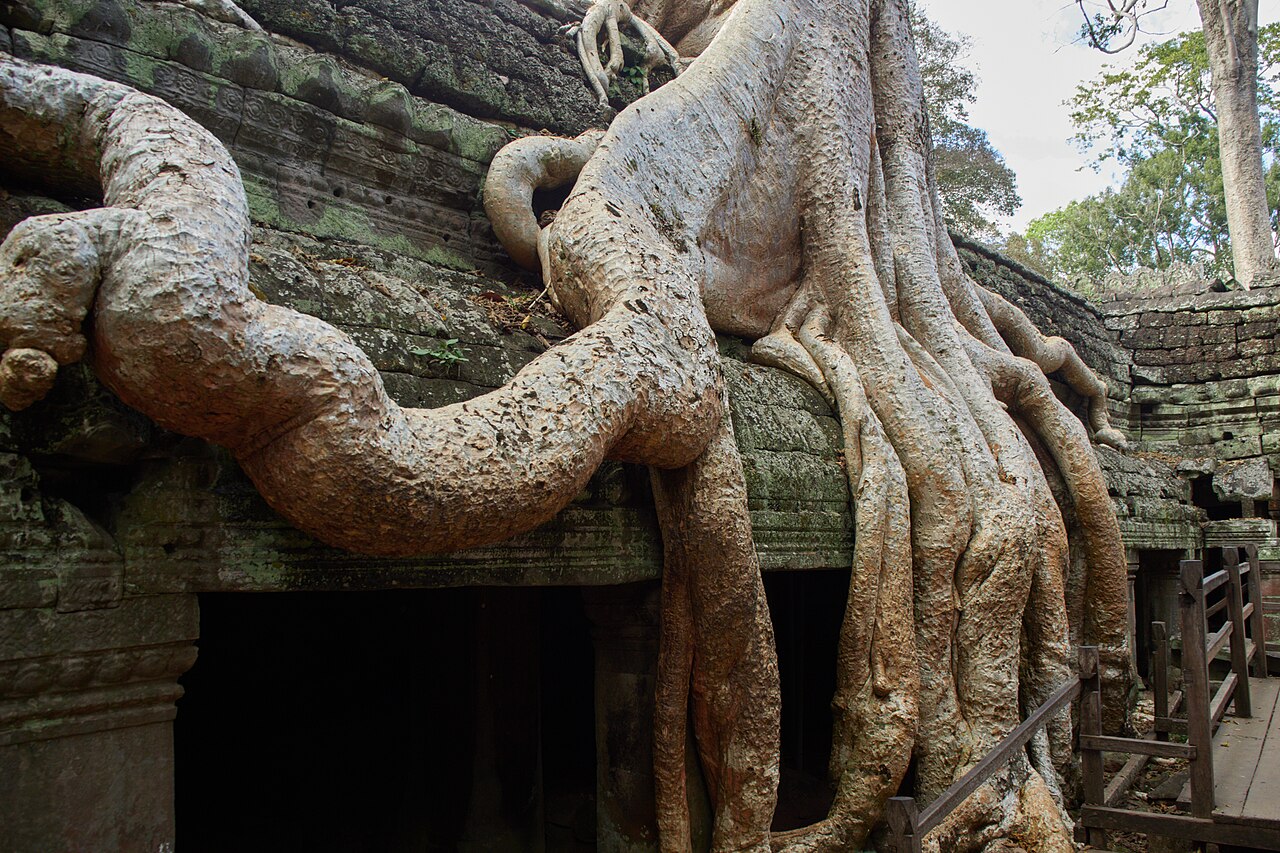
The giant pale roots of a strangler-fig tree cascading over the ancient stone galleries of the Ta Prohm temple at Angkor, Cambodia
Angkor · the tree-wrapped ruins of Ta Prohm
The scam compounds and the border — the safety essentials
Two current realities matter most. The Thailand-border zone saw heavy fighting in 2025 and, despite a December 2025 ceasefire, remains tense: the FCDO advises against travel within 20km of it, crossings are suspended, border temples are closed, and landmines and unexploded ordnance are present (stay on cleared paths anywhere rural). Separately, Cambodia has a serious, current scam/trafficking problem: criminal networks lure people — often through online job or investment offers — and then hold them and force them to work in illegal online-scam compounds. Never accept unsolicited or 'too good to be true' job offers, don't travel to meet unknown online contacts, and be alert to this danger for others too.Source: UK Foreign, Commonwealth & Development Office
Buddhism, Angkor and the weight of history
Cambodia is a Theravada Buddhist kingdom whose temples — above all Angkor — are sacred and extraordinary. Dress modestly to visit (cover shoulders and knees), remove shoes where required, be quiet and respectful, don't climb on monuments or touch Buddha images, and (for women) never touch a monk. Alongside this beauty is deep trauma: the Khmer Rouge genocide of the 1970s killed around two million people and tried to abolish religion. Memorials like Tuol Sleng (S-21) and the Killing Fields demand real respect — quiet, no casual selfies — and the country, and its young church, are still healing.Source: U.S. Department of State
Everyday warmth, the monarchy and respect
Cambodians are warm, resilient and welcoming, and most travel around Siem Reap, Phnom Penh and the coast is straightforward. The culture reveres the monarchy and prizes harmony, respect for elders and 'saving face', so greet with the sampeah (palms together), stay calm and polite, and don't disrespect the King or royal images. Poverty is visible: bargain politely, don't give to child beggars (support reputable organisations instead), take real care on the roads, and meet the country's hospitality with patience and humility.Source: Travel Readiness Engine

The border and scam/trafficking notes draw on UK FCDO travel advice for Cambodia. Contains public sector information licensed under the Open Government Licence v3.0.

Reviewed 31 Oct 2026. Cross-cultural guidance authored by the mission-readiness team, awaiting review by local partners. Broad contextual tendencies that vary by individual and setting — not rules about how any person will behave. The scam/trafficking and border cautions are deliberately foregrounded for traveller safety.

Your readiness plan

Once you've built a plan, this becomes your personal, checkable preparation for Cambodia — the same engine behind every Trefeo briefing, honest about what still needs verifying.

Personal readiness · free

Build your free plan to see what this trip asks of you.

Add your passport and the devices you'll carry — no sign-in needed — and this turns into a personal, checkable readiness plan for Cambodia: entry, accounts, devices, connectivity, culture and emergency, starting at 0% until you work through it.

Sources & licences

Every fact on this page is traceable. Each section above links its own source and review date; the full list is below.

  • Freedom House viewDigital-rights research

    Cambodia: Freedom on the Net · © Freedom House; noncommercial use with citation, commercial by permission

  • Joshua Project viewMission research

    Cambodia — people groups, languages and religions · Free to use with attribution; NON-COMMERCIAL

  • Travel Readiness EngineTrefeo editorial

    Editorial guidance (mission-readiness team)

  • U.S. Department of State viewOfficial government

    2023 Report on International Religious Freedom: Cambodia · Public domain (U.S. Government work, 17 U.S.C. §105)

  • UK Foreign, Commonwealth & Development Office viewGovernment travel advisory

    Foreign travel advice: Cambodia · Open Government Licence v3.0