Skip to content
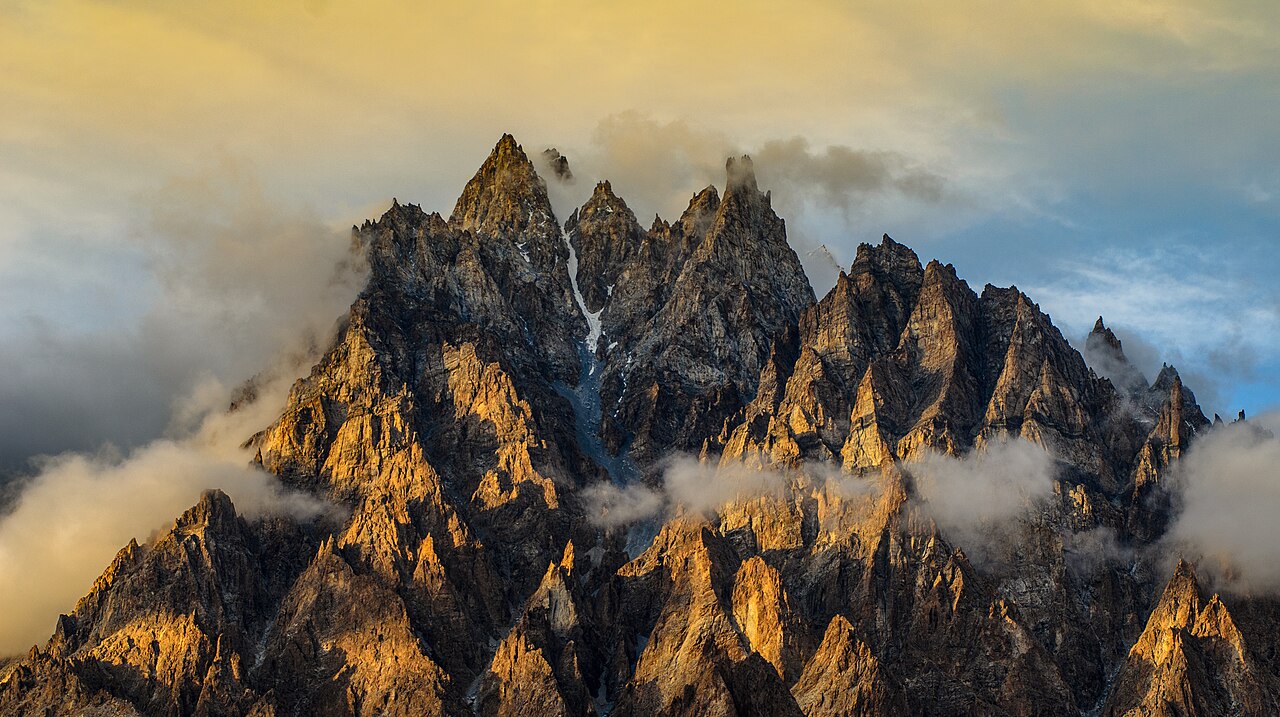
The jagged granite spires of the Passu Cones (Cathedral Ridge) in the Hunza Valley glowing gold at sunset, wreathed in cloud, in the Karakoram of northern Pakistan

Prepare for your trip to Pakistan.

A large country stretching from the Arabian Sea up the Indus valley to the Karakoram and Himalaya — Mughal cities, ancient civilisations and some of the planet's highest peaks, including K2. Famous for warm hospitality and spectacular northern valleys, it is also a conservative Islamic republic with serious security variation by region, where several areas are strongly advised against. Your briefing covers what changes the trip: entry by passport, security by region, staying connected, and local custom.

Free to explore. No sign-in needed.
Region
South Asia · the Indus & the Karakoram
Capital
Islamabad
Languages
Urdu (national) · English (official) · Punjabi, Pashto, Sindhi, Saraiki, Balochi and others
Entry
Depends on your passport

Travel advisory · UK Foreign, Commonwealth & Development Office

The UK FCDO advises against all travel to Balochistan, to much of Khyber Pakhtunkhwa (including Peshawar, Swat, North Waziristan and parts of the Karakoram Highway), to within 10 miles of the Afghan border and of the Line of Control, and against all but essential travel to Azad Jammu & Kashmir and several other areas. Elsewhere — including the main cities and popular northern areas like Hunza and Gilgit-Baltistan — it advises care: terrorism, sectarian violence and kidnapping are real risks in parts of the country. This is a foreign-government advisory; check the detailed area-specific advice before travel.

Reviewed 26 Oct 2026 · FCDO advice was last updated 13 Oct 2026 and was still current at 26 Oct 2026. Advisories are highly area-specific and conditions change — always check the latest regional advice and take local security guidance before travel.

Read the current advice

Do I need a visa for Pakistan?

For most nationalities, entry means applying online for a Tourist/Visit e-Visa before you travel (single entry, up to 3 months) — the system is open to citizens of 192 countries. GCC nationals need no visa. One hard limit: Pakistan does not accept Israeli passports. Choose the passport you'll travel with and this section adjusts to you.

Which passport will you use?

Choose your passport country, not your country of residence.

No name, passport number or document upload.

Passport not selected

Your entry context starts here

Choose a passport and this shows your real, sourced entry status for Pakistan — verified, provisional or verification-required — straight from the engine.

What should I verify before I travel?
Apply for your e-Visa and confirm your nationality's route at Pakistan's official portal (visa.nadra.gov.pk) before travel, and check your own foreign ministry. Carry a passport valid at least six months and copies of your visa. Check the area-specific security advice carefully — several regions are advised against and some need a No-Objection Certificate and permits. The final decision on admission rests with the authorities.
Why does Trefeo show "verification required"?
Trefeo keeps sourced destination context separate from passport-specific rules that still need confirmation. Selecting a passport should never turn an unverified rule into a verified requirement, so Trefeo holds it at "verification required" until it's confirmed against an authoritative source.

The high mountains.
A careful welcome.
Your context.

Pakistan can be extraordinarily rewarding, especially in the north, but it demands care: security differs sharply between regions, Islam shapes the law, and blasphemy is a grave matter. What matters depends heavily on where you're going, so this is built to skim — and to read alongside current, area-specific advice and the counsel of trusted local partners.

Staying connected in Pakistan

Operators like Jazz, Zong, Telenor and Ufone cover the cities, though tourist SIM registration can be slow and coverage thins fast in the mountains. Pakistan is rated Partly Free and tightly controls the internet: mobile data is cut during protests and security operations and platforms like X have been blocked for long periods, so plan offline fallbacks and keep commentary off religion, the military and politics.

Mobile networksJazz · Zong · Telenor · Ufone
Getting onlineSIM registration is slow; shutdowns & platform blocks happen — plan offline fallbacks
Digital conditions · sourced
Internet freedomhigh

Pakistan is rated 'Partly Free' (32/100) in Freedom in the World 2025. Connectivity exists but is tightly controlled — internet shutdowns and platform blocks are common.

Internet shutdowns & blockshigh

Mobile internet is cut during protests, rallies and security operations, and platforms such as X have been blocked for long periods. Expect disruption and plan offline fallbacks.

Online speechhigh

Laws on blasphemy, 'anti-state' content and cybercrime are enforced harshly; anything perceived as insulting Islam or the military is extremely dangerous online. Keep off religion, the military and politics entirely.

Connectivitymoderate

Operators (Jazz, Zong, Telenor, Ufone) cover the cities; tourist SIM registration can be slow for foreigners. Coverage thins sharply in the mountains and remote areas.

Personal VPNsmoderate

VPNs are widely used but face registration requirements and periodic blocking; prefer an organization-approved provider configured before arrival and verify current rules.

Photography of sensitive siteshigh

Never photograph military, security, airport or border sites or checkpoints; always ask before photographing people, especially women.

Digital conditions from Freedom House · reviewed 26 Oct 2026. Per-item sources shown by severity (Freedom House, UK FCDO, editorial).
Mission context

Pakistan is an overwhelmingly Muslim, Islamic republic where religion shapes law and daily life, and small Christian and Hindu minorities face real pressure. Blasphemy laws are severe and anything perceived as insulting Islam is acutely dangerous — so any engagement is relational, extremely discreet, strictly lawful, and above all protective of local people, who bear the greatest risk.

People groups773 total · 765 unreached
Christian adherent~0.9% (Joshua Project estimate)
Primary languagesUrdu · Punjabi · Pashto · Sindhi
Progress levelLevel 1 — overwhelmingly unreached
Explore mission-focused context
Joshua Project lists 773 people groups in Pakistan, of which 765 (about 99%) are considered unreached — among the highest concentrations of unreached peoples anywhere. It estimates Christian adherents at about 0.9% of the population; the evangelical figure is listed as unknown.
Joshua Project

People-group figures are Joshua Project estimates, used with attribution. Complements — does not replace — dedicated research platforms. Blasphemy laws are severe; discretion protects local people, who face the greatest risk. · reviewed 26 Oct 2026.

Local customs and etiquette in Pakistan

Pakistan is a conservative Islamic republic where hospitality is famous but blasphemy is a grave matter and dress and gender norms are conservative. Read the notes that fit where you're actually going — and take security advice locally.

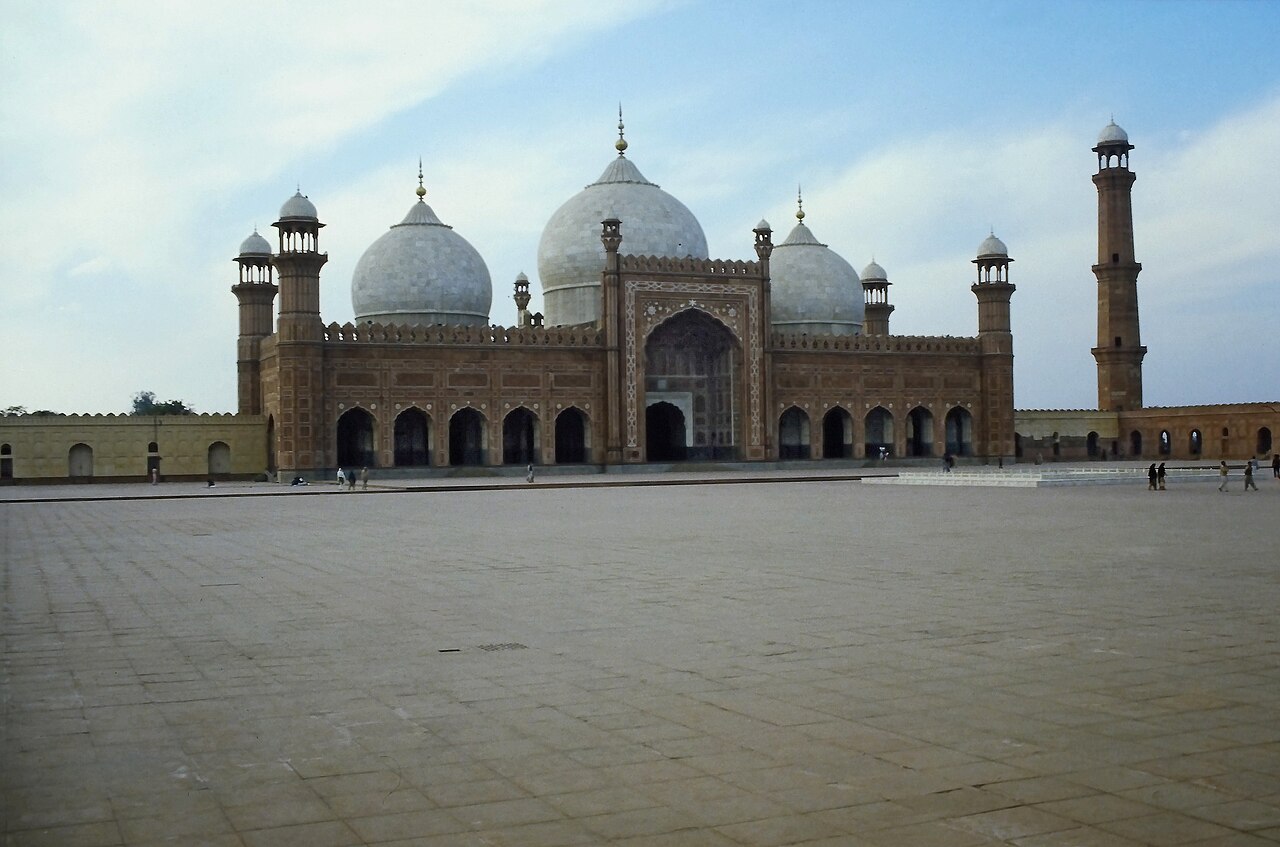
The vast red-sandstone Badshahi Mosque in Lahore, its white marble domes and four minarets rising above the great Mughal courtyard
Lahore · the Mughal Badshahi Mosque
Security varies enormously by region
Pakistan ranges from welcoming, spectacular northern valleys (Hunza, Gilgit-Baltistan) to areas governments strongly advise against — Balochistan, much of Khyber Pakhtunkhwa, and zones near the Afghan border and the Line of Control. Terrorism, sectarian violence and kidnapping are real risks in parts of the country, and some areas require a No-Objection Certificate and permits. Research every place on your route against current advice, travel with trusted local contacts, and keep plans flexible.Source: UK Foreign, Commonwealth & Development Office
Islam, blasphemy and extreme caution
Islam shapes law and daily life, and blasphemy laws are among the harshest in the world — accusations alone have led to violence and killings. Never say, write, carry or do anything that could be perceived as insulting Islam, the Prophet or the Quran; handle any religious text with great care; and do not debate religion. Keep personal faith entirely private, never proselytise or distribute materials, and understand that the gravest risk falls on local people — protect them above all.Source: U.S. Department of State
Dress, gender and everyday custom
Dress modestly and conservatively — cover arms and legs; women should dress very modestly and usually cover the head at religious sites, and local dress (shalwar kameez) is appreciated. Interaction between unrelated men and women is more reserved and some spaces are segregated, so take cues locally. Use your right hand for giving, receiving and eating, respect prayer times and Ramadan, and keep public affection private.Source: UK Foreign, Commonwealth & Development Office
Health, safety and getting around
Tap water isn't safe to drink and stomach illness is common; air quality in big cities can be poor in winter. Road travel is a major risk and some routes require security escorts or permits, so use reputable drivers and plan long journeys carefully. Carry cash (card acceptance is limited outside cities), get good insurance that covers your activities and any trekking, and keep copies of your visa and passport. Good medical care is concentrated in the main cities.Source: UK Foreign, Commonwealth & Development Office

The regional-security, blasphemy, dress/gender and health notes draw on UK FCDO travel advice and the US State Department religious-freedom report for Pakistan. Contains public sector information licensed under the Open Government Licence v3.0.

Reviewed 26 Oct 2026. Cross-cultural guidance authored by the mission-readiness team, awaiting review by local partners. Broad contextual tendencies that vary by individual, region and setting — not rules about how any person will behave.

Your readiness plan

Once you've built a plan, this becomes your personal, checkable preparation for Pakistan — the same engine behind every Trefeo briefing, honest about what still needs verifying.

Personal readiness · free

Build your free plan to see what this trip asks of you.

Add your passport and the devices you'll carry — no sign-in needed — and this turns into a personal, checkable readiness plan for Pakistan: entry, accounts, devices, connectivity, culture and emergency, starting at 0% until you work through it.

Sources & licences

Every fact on this page is traceable. Each section above links its own source and review date; the full list is below.

  • Freedom House viewDigital-rights research

    Pakistan: Freedom in the World 2025 · © Freedom House; noncommercial use with citation, commercial by permission

  • Joshua Project viewMission research

    Pakistan — people groups, languages and religions · Free to use with attribution; NON-COMMERCIAL

  • Travel Readiness EngineTrefeo editorial

    Editorial guidance (mission-readiness team)

  • U.S. Department of State viewOfficial government

    2023 Report on International Religious Freedom: Pakistan · Public domain (U.S. Government work, 17 U.S.C. §105)

  • UK Foreign, Commonwealth & Development Office viewGovernment travel advisory

    Foreign travel advice: Pakistan · Open Government Licence v3.0