Skip to content
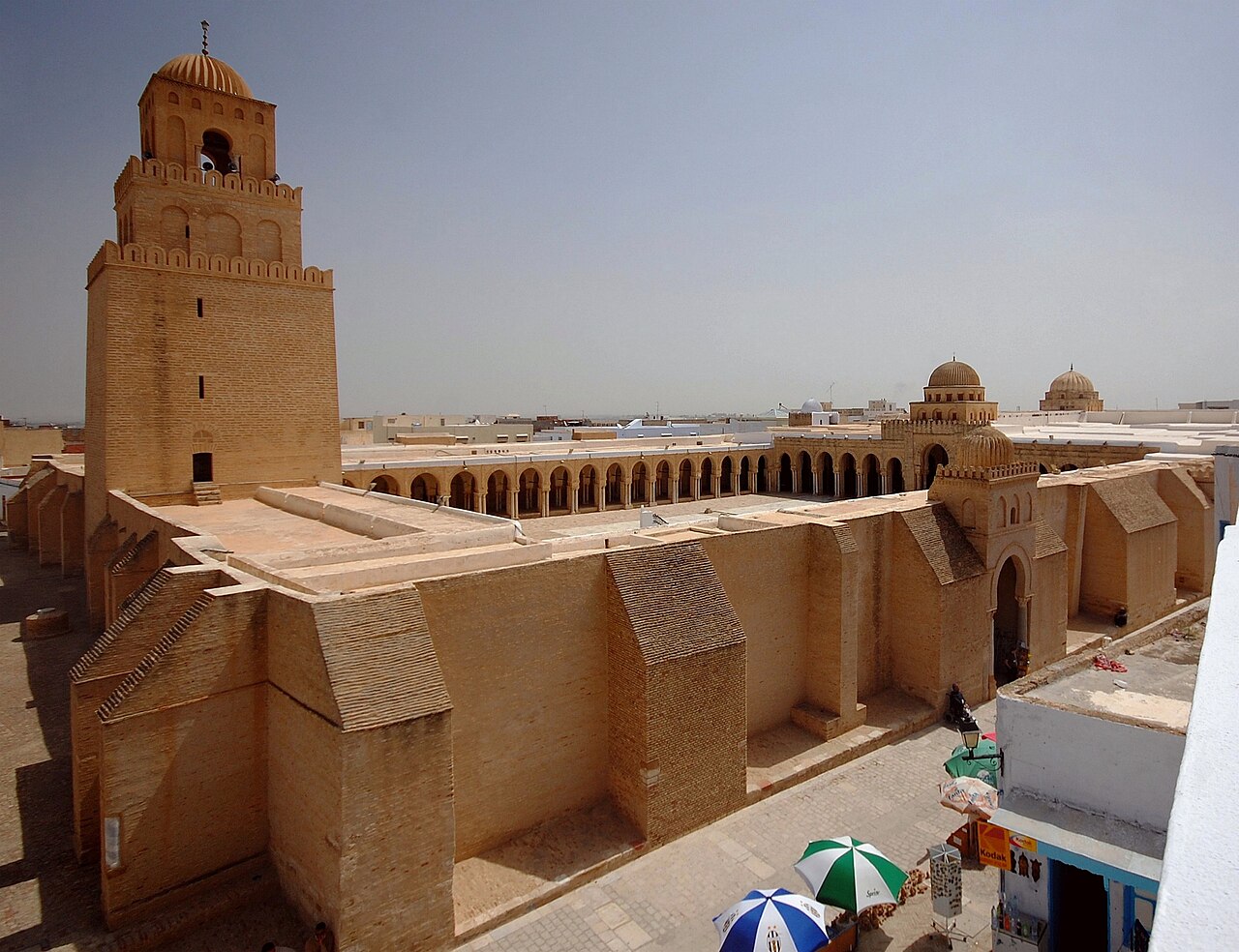
The golden-stone minaret, arcaded courtyard and domes of the Great Mosque of Kairouan under a hazy sky, with the town of Kairouan beyond

Prepare for your trip to Tunisia.

A Mediterranean country at Africa's northern tip — from the beaches and old medinas of Tunis, Hammamet and Sousse to the Roman ruins, the island of Djerba and the edge of the Sahara. The most socially liberal of the Maghreb states and a long-standing tourism destination; the coast is calm while remote border zones carry terrorism risk. Your briefing covers what changes the trip: entry by passport, staying connected, and local custom beyond the resorts.

Free to explore. No sign-in needed.
Region
North Africa · the Mediterranean and the Sahara
Capital
Tunis
Languages
Arabic (official) · French (business, government, education) · Tamazight / Berber (small minority)
Entry
Depends on your passport

Travel advisory · UK Foreign, Commonwealth & Development Office

The UK FCDO advises against all travel to parts of western Tunisia (the Chaambi Mountains National Park and listed military zones) and to the Libyan border area (the militarised zone south of El Borma and Dhehiba, within 20km of the border north of Dhehiba, and Ben Guerdane), and against all but essential travel to wider border zones with Algeria and Libya, citing cross-border terrorism. The main tourist areas — Tunis, Hammamet, Sousse, Djerba and the coast — are not under these warnings, but there is a general terrorism risk. This is a foreign-government advisory; check the latest advice before travel.

Reviewed 27 Oct 2026 · FCDO advice was last updated 24 Jul 2026 and was still current at 27 Oct 2026. The advise-against-travel zones are the Algerian and Libyan border regions; the main tourist areas are excluded, but conditions can change — verify before travel.

Read the current advice

Do I need a visa for Tunisia?

Many travellers are visa-free: a large set of nationalities (EU and most of Europe, the US, UK, Canada, Australia, the GCC, and many others) can enter for up to 90 days, with no visa on arrival and no e-Visa. Some nationalities are visa-free only on an organised tour, and others need a visa in advance. Tunisia doesn't publish an accessible per-nationality list, so this section is provisional — choose your passport, then confirm with a Tunisian mission.

Which passport will you use?

Choose your passport country, not your country of residence.

No name, passport number or document upload.

Passport not selected

Your entry context starts here

Choose a passport and this shows your real, sourced entry status for Tunisia — verified, provisional or verification-required — straight from the engine.

What should I verify before I travel?
Confirm your own nationality's pathway with a Tunisian diplomatic mission or the Ministry of Foreign Affairs (diplomatie.gov.tn) before travel, and check your own foreign ministry — the lists were revised in 2026. Carry a passport valid for your whole stay, and don't overstay (fines are payable on departure). The final decision on admission rests with the authorities.
Why does Trefeo show "verification required"?
Trefeo keeps sourced destination context separate from passport-specific rules that still need confirmation. Selecting a passport should never turn an unverified rule into a verified requirement, so Trefeo holds it at "verification required" until it's confirmed against an authoritative source.

The Mediterranean.
A relaxed Maghreb.
Your context.

Tunisia is easy and rewarding to travel — visa-free for most, with great beaches, ancient sites and real warmth — but its visa lists aren't published in an accessible form, online speech is risky, and conservative norms apply away from the resorts. What matters depends on your passport and where you're going, so this is built to skim.

Staying connected in Tunisia

Operators Ooredoo, Orange and Tunisie Telecom cover the country well, and a tourist SIM (bought with your passport) or a travel eSIM is simplest. Tunisia is rated Partly Free: social media and websites are generally not blocked, but people have been imprisoned for online posts under a 2022 cybercrime decree — keep commentary measured on politics, the president and 'moral values', and treat shared networks as untrusted.

Mobile networksOoredoo · Orange · Tunisie Telecom
Getting onlinePassport-registered SIM or eSIM; keep commentary off politics & the president
Digital conditions · sourced
Internet freedommoderate

Tunisia is rated 'Partly Free' (59/100) in Freedom on the Net 2025. Social media and websites are generally not blocked, and connectivity is good, but the climate has tightened.

Online speechhigh

Users have faced severe penalties — including multi-year prison sentences — for online speech under Decree-Law 2022-54. Keep commentary off politics, the president and 'moral values'.

Connectivitylow

Operators (Ooredoo, Orange, Tunisie Telecom) cover the country well; a tourist SIM (bought with your passport) or a travel eSIM is simplest.

Personal VPNslow

VPNs are generally usable; prefer an organization-approved provider configured before arrival and verify current rules.

Public Wi-Fimoderate

Treat hotel, resort and cafe networks as untrusted; avoid sensitive sign-ins without a VPN.

Photography and privacymoderate

Do not photograph military, police or government sites; ask before photographing people, especially women, and expect to tip for posed photos in tourist areas.

Digital conditions from Freedom House · reviewed 27 Oct 2026. Per-item sources shown by severity (Freedom House, UK FCDO, editorial).
Mission context

Tunisia is almost entirely Sunni Muslim, with Islam the religion of the state. Christians are a very small minority, mostly foreign residents and a discreet community of Tunisian believers, and there is a small ancient Jewish community on Djerba. Engagement is relational and highly discreet: the social and legal climate around changing or discussing faith is sensitive, and discretion protects local people.

People groups19 total · 17 unreached · 11 frontier
Evangelical~0.0% (Joshua Project estimate)
Primary languageArabic
Progress levelLevel 1 — unreached
Explore mission-focused context
Joshua Project lists 19 people groups in Tunisia, 17 of them unreached (about 90%) and 11 considered frontier (least-reached). It estimates roughly 0.0% evangelical and about 0.4% Christian adherents overall. The largest group by far is the Tunisian Arab, estimated near 11 million, alongside smaller Berber (Amazigh) groups.
Joshua Project

People-group figures are Joshua Project estimates, used with attribution. Complements — does not replace — dedicated research platforms. The climate around faith is sensitive; discretion protects local people. · reviewed 27 Oct 2026.

Local customs and etiquette in Tunisia

Tunisia is the most relaxed of the Maghreb states — easy on the coast and in Tunis — but still a Muslim-majority society, with more conservative dress and custom in the medinas, rural areas and the south. Read the notes that fit where you're going.

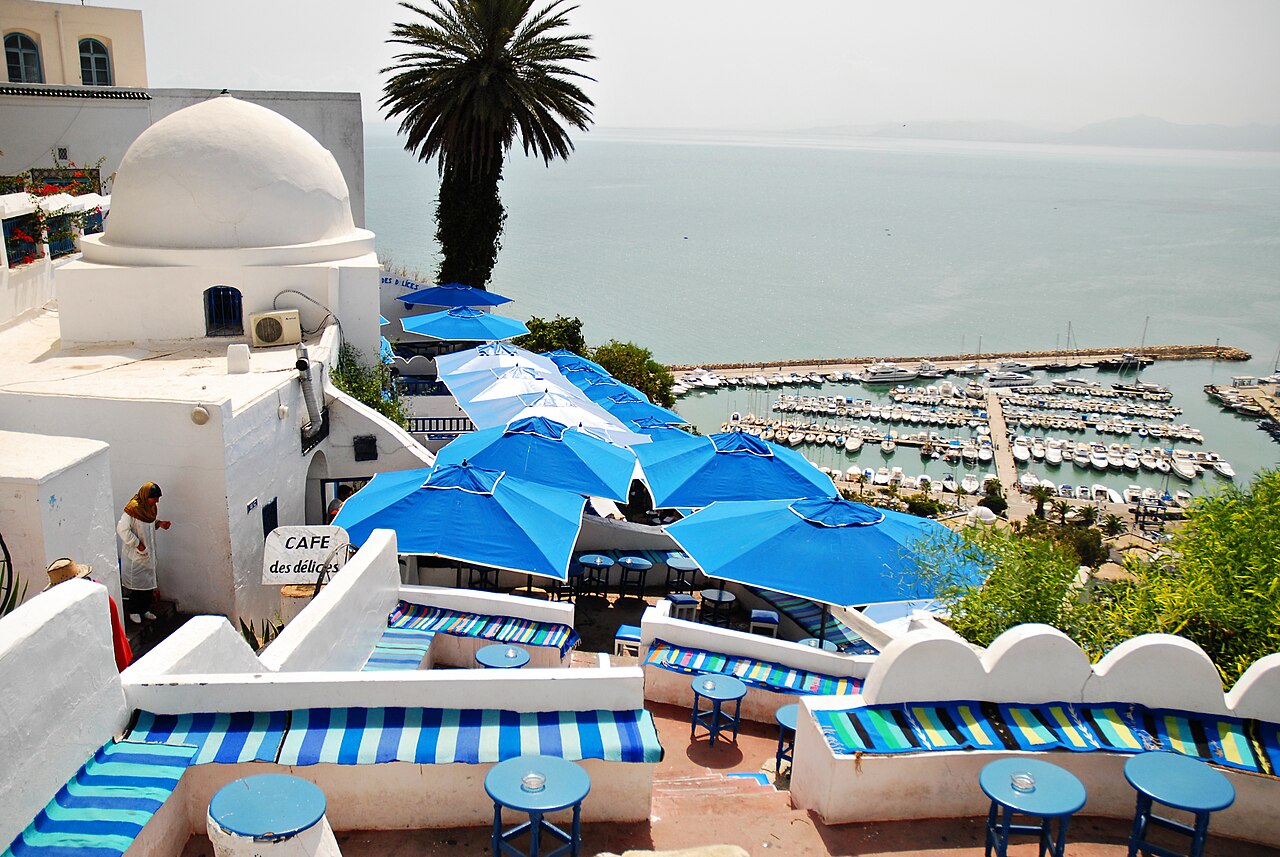
The blue parasols and blue-and-white striped seats of the Café des Délices in the hilltop town of Sidi Bou Saïd, with a white domed building and a palm tree overlooking the marina and the blue Mediterranean
Sidi Bou Saïd · the Café des Délices above the Mediterranean
A more relaxed Maghreb — with limits
Tunisia is the most socially liberal of the Maghreb states, with a strong tourism tradition on the coast, relatively relaxed dress in Tunis and the resorts, and a reputation for warmth. But it is still a Muslim-majority society: away from the beaches and the capital, dress and conduct are more conservative, and the political climate has tightened in recent years. Enjoy the openness, but read the room — what's fine in a Hammamet resort may not be in a rural medina.Source: Travel Readiness Engine
Religion, politics and online speech
Islam is the religion of the state, and while Tunisia is relatively relaxed, public criticism of the president, the government or religion carries real risk — people have been prosecuted and imprisoned for online posts under Decree-Law 2022-54. Keep personal faith private, never proselytise, and keep political and religious commentary off social media while in the country. Western Sahara is not a Tunisian issue, but regional politics are still best left alone.Source: Freedom House
Safety, borders and the desert
The main tourist areas are generally safe and well-policed, though there is a general terrorism risk (Tunisia saw major attacks in 2015). Governments advise against travel to the border regions with Algeria (the Chaambi Mountains and listed military zones) and Libya (south of El Borma/Dhehiba and Ben Guerdane). For Saharan trips, use reputable operators, carry water and prepare for extremes; stay well clear of the border zones.Source: UK Foreign, Commonwealth & Development Office
Djerba and a long Jewish history
The island of Djerba is home to one of the oldest Jewish communities in the world and the El Ghriba synagogue, a place of pilgrimage. Tunisia's heritage is layered — Carthaginian, Roman, Arab, Ottoman, French — and its sites (Carthage, Dougga, El Jem, Kairouan) are a major part of any visit. Treat religious and heritage sites, and the communities around them, with respect; security around the synagogue can be heightened at pilgrimage times.Source: U.S. Department of State

The religion/online-speech and safety/borders notes draw on UK FCDO travel advice for Tunisia and Freedom House. Contains public sector information licensed under the Open Government Licence v3.0.

Reviewed 27 Oct 2026. Cross-cultural guidance authored by the mission-readiness team, awaiting review by local partners. Broad contextual tendencies that vary by individual and setting — not rules about how any person will behave.

Your readiness plan

Once you've built a plan, this becomes your personal, checkable preparation for Tunisia — the same engine behind every Trefeo briefing, honest about what still needs verifying.

Personal readiness · free

Build your free plan to see what this trip asks of you.

Add your passport and the devices you'll carry — no sign-in needed — and this turns into a personal, checkable readiness plan for Tunisia: entry, accounts, devices, connectivity, culture and emergency, starting at 0% until you work through it.

Sources & licences

Every fact on this page is traceable. Each section above links its own source and review date; the full list is below.

  • Freedom House viewDigital-rights research

    Tunisia: Freedom on the Net 2025 · © Freedom House; noncommercial use with citation, commercial by permission

  • Joshua Project viewMission research

    Tunisia — people groups, languages and religions · Free to use with attribution; NON-COMMERCIAL

  • Travel Readiness EngineTrefeo editorial

    Editorial guidance (mission-readiness team)

  • U.S. Department of State viewOfficial government

    2023 Report on International Religious Freedom: Tunisia · Public domain (U.S. Government work, 17 U.S.C. §105)

  • UK Foreign, Commonwealth & Development Office viewGovernment travel advisory

    Foreign travel advice: Tunisia · Open Government Licence v3.0