Skip to content
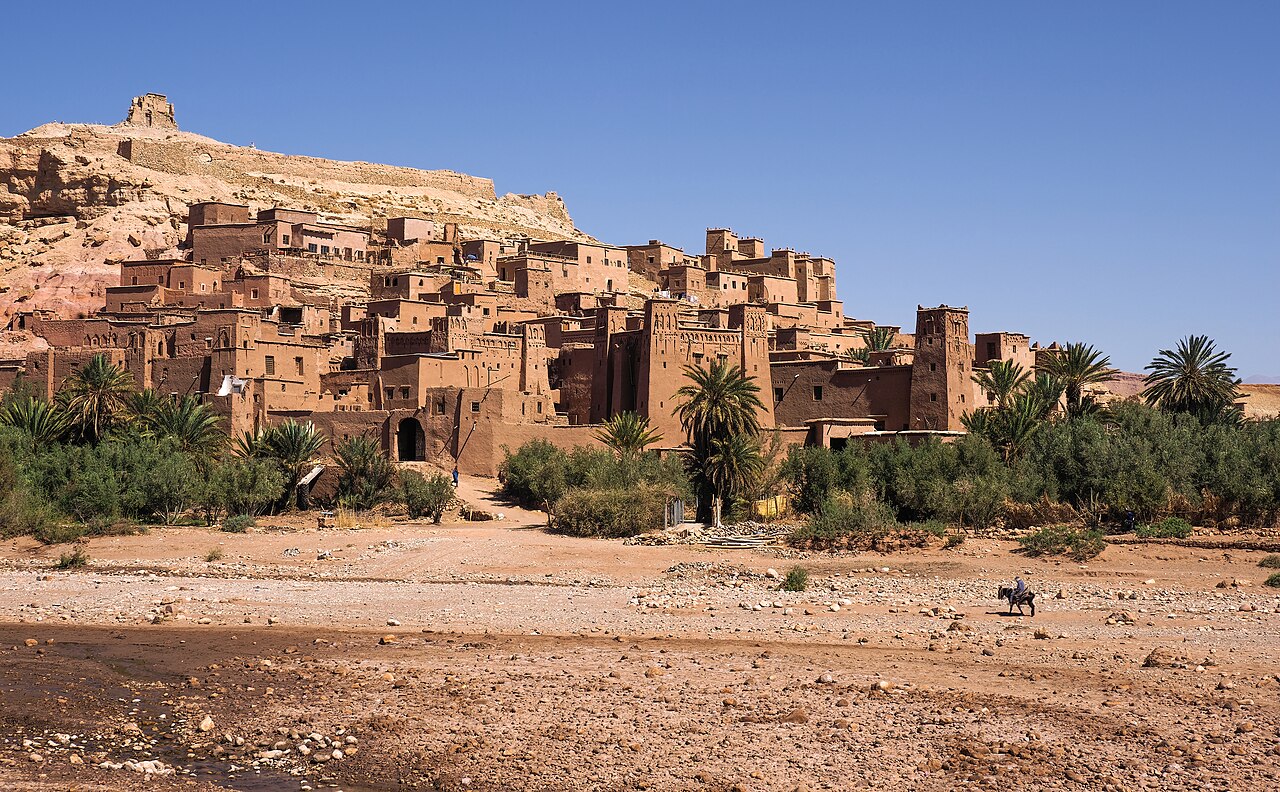
The earthen kasbah of Aït Benhaddou, a fortified village of red-brown clay buildings rising up a hillside above palm trees and a dry riverbed, under a clear blue sky

Prepare for your trip to Morocco.

A kingdom at Africa's north-western corner — from Atlantic and Mediterranean coasts over the Atlas mountains to the edge of the Sahara. Imperial cities, labyrinthine medinas, kasbahs and dunes, hospitable and well-travelled, alongside a conservative Muslim society and a powerful monarchy. Your briefing covers what changes the trip: entry by passport (verified from the official portal), staying connected, and local custom beyond the resorts.

Free to explore. No sign-in needed.
Region
North Africa · the Atlas and the Sahara
Capital
Rabat
Languages
Arabic (official) · Tamazight / Berber (official) · French (business, government, education) · Spanish (widely understood in the north)
Entry
Depends on your passport

Travel advisory · UK Foreign, Commonwealth & Development Office

The UK FCDO does not advise against travel to Morocco's main tourist areas, which are generally safe, but notes a general terrorism risk, the need for care at demonstrations, and that the Morocco-Algeria land and sea border is closed ('Do not attempt to cross'). Western Sahara is a disputed territory with separate travel advice and unexploded ordnance in places. This is a foreign-government advisory; check the latest advice before travel.

Reviewed 27 Oct 2026 · FCDO advice was last updated 19 Aug 2026 and was still current at 27 Oct 2026. There is no advise-against-travel warning for Morocco's main areas; the Algeria border is closed and Western Sahara has its own advice. Conditions can change — verify before travel.

Read the current advice

Do I need a visa for Morocco?

Good news for most travellers: Morocco is visa-free for many nationalities (up to 90 days), while some need a Morocco e-Visa or an AEVM travel authorisation obtained online in advance, and others need a visa from a Moroccan mission. This section is verified from the official Accès Maroc portal — choose the passport you'll travel with and it adjusts to you.

Which passport will you use?

Choose your passport country, not your country of residence.

No name, passport number or document upload.

Passport not selected

Your entry context starts here

Choose a passport and this shows your real, sourced entry status for Morocco — verified, provisional or verification-required — straight from the engine.

What should I verify before I travel?
Confirm your own nationality's pathway on the official portal (acces-maroc.ma — beware imitation sites) and check your own foreign ministry. Morocco is rolling out the AEVM to more visa-exempt nationalities, so check whether you now need one even if you're visa-free. Carry a passport valid at least six months. The final decision on admission rests with the authorities.
Why does Trefeo show "verification required"?
Trefeo keeps sourced destination context separate from passport-specific rules that still need confirmation. Selecting a passport should never turn an unverified rule into a verified requirement, so Trefeo holds it at "verification required" until it's confirmed against an authoritative source.

The medinas.
A kingdom.
Your context.

Morocco is rewarding and generally easy to travel — a visa-free welcome for most, and some of the world's great cities and landscapes — but medina life, religion and the monarchy ask for respect and a little care. What matters depends on your passport and where you're going, so this is built to skim.

Staying connected in Morocco

Three operators — Maroc Telecom, Orange and Inwi — cover the country well, and a tourist SIM (bought with your passport) or a travel eSIM is simplest. Morocco is rated Partly Free: websites are generally not blocked and connectivity is good, but self-censorship on the monarchy, religion and Western Sahara is widespread and people have been prosecuted for posts — keep commentary measured and treat shared networks as untrusted.

Mobile networksMaroc Telecom · Orange · Inwi
Getting onlinePassport-registered SIM or eSIM; keep commentary off the monarchy, religion & Western Sahara
Digital conditions · sourced
Internet freedommoderate

Morocco is rated 'Partly Free' (54/100) in Freedom on the Net 2025. Websites are generally not blocked, and connectivity is good, but the climate is constrained.

Online speechmoderate

Self-censorship on Western Sahara, the monarchy and religion is widespread, and users have been arrested and prosecuted for posts. Keep commentary off those topics.

Connectivitylow

Three operators (Maroc Telecom, Orange, Inwi) cover the country well; a tourist SIM (bought with your passport) or a travel eSIM is simplest. VoIP calling has historically been restricted at times — check before relying on app calls.

Personal VPNslow

VPNs are generally usable; prefer an organization-approved provider configured before arrival and verify current rules.

Public Wi-Fimoderate

Treat hotel, riad and cafe networks as untrusted; avoid sensitive sign-ins without a VPN.

Photography and privacymoderate

Do not photograph military, police, royal palaces or sensitive sites; ask before photographing people, especially women, and expect to tip for posed photos in tourist areas.

Digital conditions from Freedom House · reviewed 27 Oct 2026. Per-item sources shown by severity (Freedom House, UK FCDO, editorial).
Mission context

Morocco is almost entirely Sunni Muslim, and the state defines national identity in Islamic terms, with the King as 'Commander of the Faithful'. Christians are a very small minority, mostly foreign residents and a discreet community of Moroccan believers. Any engagement is relational and highly discreet: attempting to convert a Muslim is illegal, and distributing religious materials can bring serious consequences for locals and visitors.

People groups29 total · 27 unreached · 23 frontier
Evangelical~0.1% (Joshua Project estimate)
Primary languageArabic & Tamazight
Progress levelLevel 1 — unreached
Explore mission-focused context
Joshua Project lists 29 people groups in Morocco, 27 of them unreached (about 93%) and 23 considered frontier (least-reached). It estimates roughly 0.1% evangelical and about 0.2% Christian adherents overall. The largest group by far is the Moroccan Arab, estimated near 26 million, alongside major Berber (Amazigh) groups.
Joshua Project

People-group figures are Joshua Project estimates, used with attribution. Complements — does not replace — dedicated research platforms. Converting a Muslim is illegal in Morocco; discretion protects local people. · reviewed 27 Oct 2026.

Local customs and etiquette in Morocco

Morocco is warmly hospitable and relatively relaxed in its cities and resorts, but medinas, rural areas and religious sites are conservative — and the monarchy and Islam command real respect. Dress and behave for where you are, and read the notes that fit your trip.

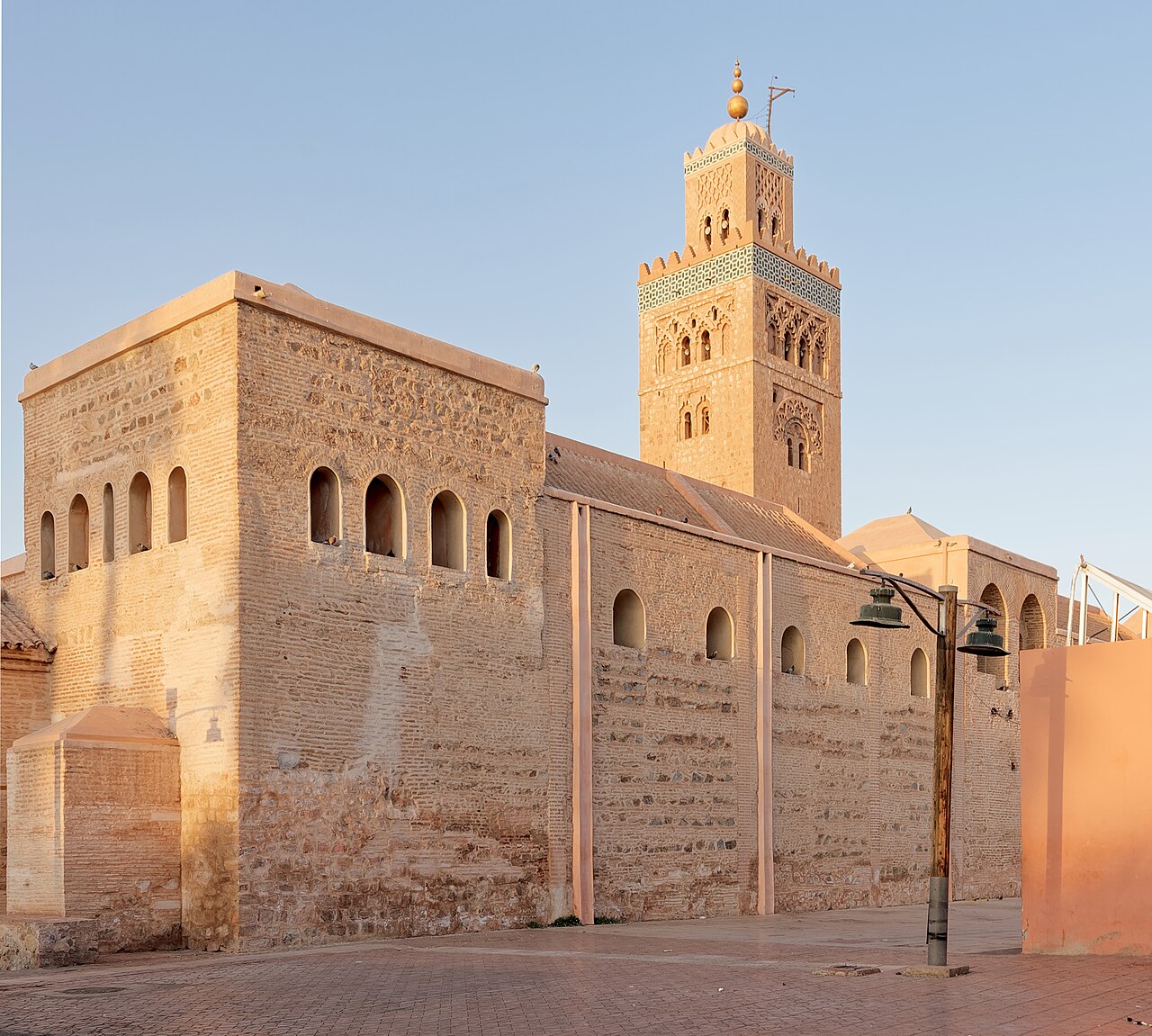
The tall sandstone minaret and walls of the 12th-century Koutoubia Mosque in Marrakech, lit golden at sunset against a pale blue sky
Marrakech · the Koutoubia Mosque at sunset
The medina, bargaining and faux guides
Morocco's old medinas (Marrakech, Fez) are labyrinths of souks where haggling is the norm and the experience is part of the appeal. Agree prices before you buy, stay good-humoured, and feel free to walk away. Be aware of unofficial 'faux guides' who attach themselves to visitors and expect payment, and of over-helpful directions that lead to a shop. Use licensed guides arranged through your riad or a reputable agency, and settle taxi fares or insist on the meter in advance.Source: Travel Readiness Engine
Religion, the monarchy and the law
Islam is the state religion and the King is 'Commander of the Faithful'; both command deep respect, and public criticism of the monarchy or Islam — in person or online — can bring legal trouble. Attempting to convert a Muslim, or distributing religious materials, is a criminal offence, so keep personal faith private and never draw local people into religious conversation. Most working mosques are closed to non-Muslims. Western Sahara is a highly sensitive subject best left alone.Source: U.S. Department of State
Dress, conduct and Ramadan
Cities and coastal resorts are relatively relaxed, but medinas, rural areas and religious sites are conservative: cover shoulders and knees away from pools and beaches, and keep public affection discreet. Same-sex relationships and sex outside marriage are criminalised. During Ramadan, eating, drinking and smoking in public during daylight is restricted and many cafes close in the daytime — be discreet and respectful.Source: UK Foreign, Commonwealth & Development Office
Safety, borders and the desert
Morocco's main tourist areas are generally safe and well-policed, though petty theft occurs in crowded medinas and there is a general terrorism risk. The Morocco-Algeria border is closed — do not try to cross it — and Western Sahara is a disputed territory with separate advice and unexploded ordnance in places. For the desert and the High Atlas, use reputable operators, carry water, and be prepared for extremes of heat and cold.Source: UK Foreign, Commonwealth & Development Office

The religion/monarchy, dress/Ramadan and safety/borders notes draw on UK FCDO travel advice for Morocco. Contains public sector information licensed under the Open Government Licence v3.0.

Reviewed 27 Oct 2026. Cross-cultural guidance authored by the mission-readiness team, awaiting review by local partners. Broad contextual tendencies that vary by individual and setting — not rules about how any person will behave.

Your readiness plan

Once you've built a plan, this becomes your personal, checkable preparation for Morocco — the same engine behind every Trefeo briefing, honest about what still needs verifying.

Personal readiness · free

Build your free plan to see what this trip asks of you.

Add your passport and the devices you'll carry — no sign-in needed — and this turns into a personal, checkable readiness plan for Morocco: entry, accounts, devices, connectivity, culture and emergency, starting at 0% until you work through it.

Sources & licences

Every fact on this page is traceable. Each section above links its own source and review date; the full list is below.

  • Freedom House viewDigital-rights research

    Morocco: Freedom on the Net 2025 · © Freedom House; noncommercial use with citation, commercial by permission

  • Joshua Project viewMission research

    Morocco — people groups, languages and religions · Free to use with attribution; NON-COMMERCIAL

  • Travel Readiness EngineTrefeo editorial

    Editorial guidance (mission-readiness team)

  • U.S. Department of State viewOfficial government

    2023 Report on International Religious Freedom: Morocco · Public domain (U.S. Government work, 17 U.S.C. §105)

  • UK Foreign, Commonwealth & Development Office viewGovernment travel advisory

    Foreign travel advice: Morocco · Open Government Licence v3.0