Skip to content
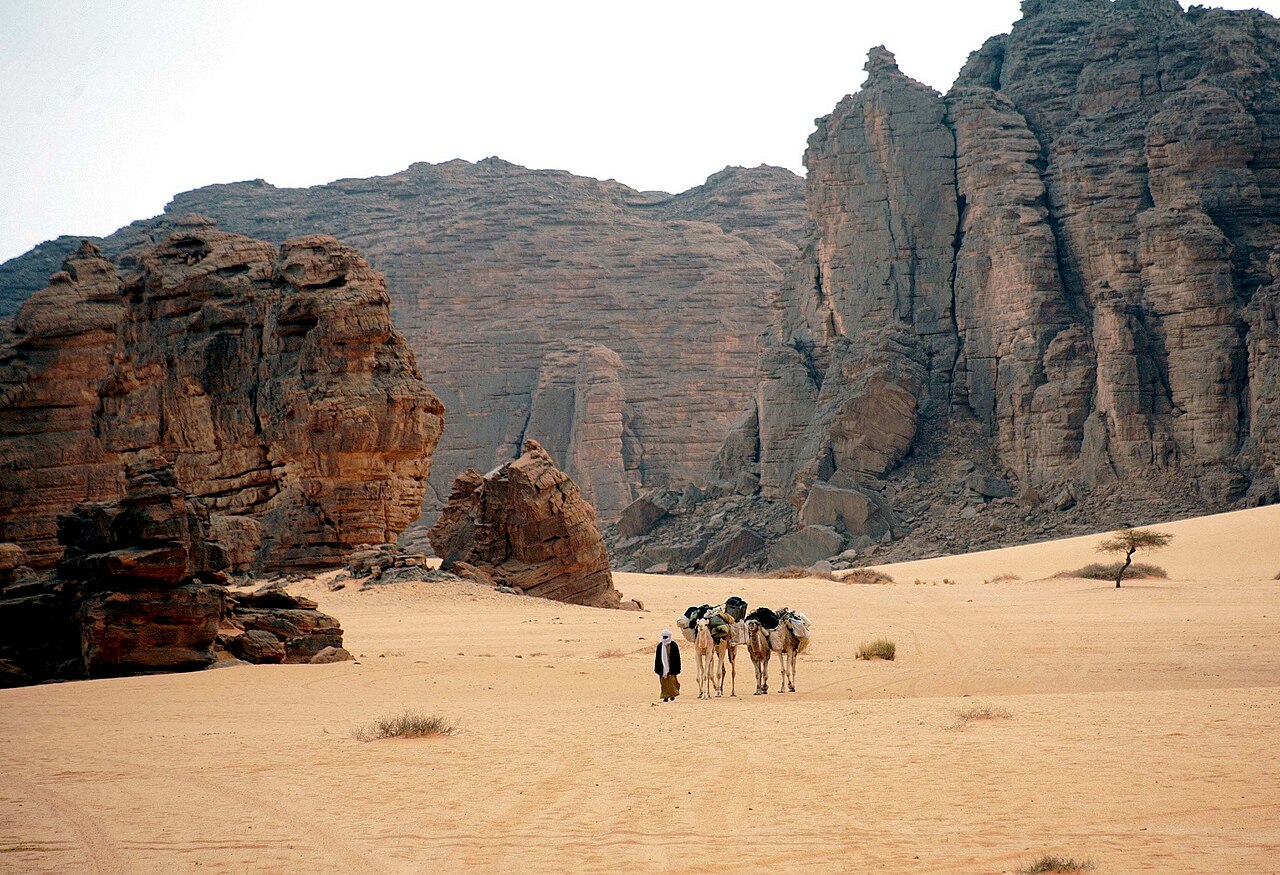
A Tuareg nomad in a white robe and turban leading a small camel caravan across golden sand beneath the towering eroded sandstone cliffs of the Tassili n'Ajjer in the Algerian Sahara

Prepare for your trip to Algeria.

The largest country in Africa — from the Mediterranean coast and the capital Algiers over the Atlas to the vast Sahara of the south. A strong, security-conscious state with oil and gas wealth and relatively little tourism; the north functions normally while the desert, the deep south and the long borders carry real risk. Your briefing covers what changes the trip: entry by passport (a visa in advance for almost everyone), staying connected under tight controls, and local custom.

Free to explore. No sign-in needed.
Region
North Africa · the Mediterranean and the Sahara
Capital
Algiers
Languages
Arabic (official) · Tamazight / Berber (official) · French (business, government, education)
Entry
Depends on your passport

Travel advisory · UK Foreign, Commonwealth & Development Office

The UK FCDO advises against all travel to within 30km of Algeria's borders with Libya, Mauritania, Mali and Niger, and to parts of the Tunisia border (Illizi and Ouargla provinces and the Chaambi mountains area), and against all but essential travel to within 30km of the rest of the Tunisia border, citing terrorism and cross-border threats. The northern cities, including Algiers and Oran, are not under these warnings, but there is a general terrorism risk and travel in the Sahara requires authorisation and a licensed escort. This is a foreign-government advisory; check the latest advice before travel.

Reviewed 27 Oct 2026 · FCDO advice was last updated 25 Sep 2026 and was still current at 27 Oct 2026. The advise-against-travel zones are the borders and parts of the Sahara; the northern cities are excluded, but conditions can change — verify before travel.

Read the current advice

Do I need a visa for Algeria?

Plan your visa early. Algeria is visa-required for almost all nationalities — you apply in advance at an Algerian embassy or consulate, and there is no general visa on arrival. A few neighbours are visa-free, approved tour groups can get a visa on arrival for the southern desert, and Israeli passports are refused. Algeria doesn't publish an accessible per-nationality list, so this section is provisional — choose your passport, then confirm with an Algerian mission.

Which passport will you use?

Choose your passport country, not your country of residence.

No name, passport number or document upload.

Passport not selected

Your entry context starts here

Choose a passport and this shows your real, sourced entry status for Algeria — verified, provisional or verification-required — straight from the engine.

What should I verify before I travel?
Confirm your own nationality's visa requirement with an Algerian diplomatic mission or the Ministry of Foreign Affairs (mfa.gov.dz) before travel, and check your own foreign ministry. Carry a passport valid at least six months with blank pages, declare foreign currency on arrival and keep the declaration for departure. The final decision on admission rests with the authorities.
Why does Trefeo show "verification required"?
Trefeo keeps sourced destination context separate from passport-specific rules that still need confirmation. Selecting a passport should never turn an unverified rule into a verified requirement, so Trefeo holds it at "verification required" until it's confirmed against an authoritative source.

The Sahara.
A security state.
Your context.

Algeria is rewarding but demanding to travel — a visa in advance for almost everyone, a cautious bureaucracy, strict rules on photography and online speech, and conservative norms. What matters depends on your passport and where you're going, so this is built to skim — and to read alongside current advice and trusted local partners.

Staying connected in Algeria

Mobile coverage (Mobilis, Djezzy, Ooredoo) is good in the north but thin in the desert. Algeria is rated Not Free: the state monitors the internet extensively, people have been jailed for online posts under a 2024 penal code, and internet access is widely reported to be cut nationwide during exam periods — keep commentary off the state, the army and religion, plan offline fallbacks, and treat shared networks as untrusted.

Mobile networksMobilis · Djezzy · Ooredoo
Getting onlinePassport SIM; nationwide shutdowns during exams — plan offline; keep speech off politics
Digital conditions · sourced
Internet freedomhigh

Algeria is rated 'Not Free' (31/100) in Freedom in the World 2025. The state monitors internet activity extensively, and the environment for online speech is repressive.

Online speechhigh

Social-media users have been prosecuted and jailed for criticising the government, officials, the security forces or religion under the 2024 penal code. Assume monitoring and keep commentary off these topics.

Connectivityhigh

Mobile coverage (Mobilis, Djezzy, Ooredoo) is good in the north but thin in the desert. Algeria is widely reported to cut internet access nationwide during national exam periods (typically June) — plan offline fallbacks.

Personal VPNsmoderate

VPNs are used to reach blocked services, but the climate is hostile — use an organization-approved provider configured before arrival and be discreet.

Public Wi-Fimoderate

Treat hotel and cafe networks as untrusted and monitored; avoid sensitive sign-ins without a VPN.

Photography and privacyhigh

Do not photograph military, police, government or oil/gas sites — it is restricted and enforced. Ask before photographing people.

Digital conditions from Freedom House · reviewed 27 Oct 2026. Per-item sources shown by severity (Freedom House, UK FCDO, editorial).
Mission context

Algeria is almost entirely Sunni Muslim, and the state defines national identity in Islamic terms. There is a small Christian community, notably among the Berbers of Kabylie, which has faced real pressure — church closures and prosecutions. Engagement is relational, highly discreet and mindful of the law: non-Muslim worship is confined to licensed places, proselytising Muslims is illegal, and discretion protects local believers.

People groups37 total · 35 unreached · 29 frontier
Evangelical~0.0% (Joshua Project estimate)
Primary languageArabic & Tamazight
Progress levelLevel 1 — unreached
Explore mission-focused context
Joshua Project lists 37 people groups in Algeria, 35 of them unreached (about 95%) and 29 considered frontier (least-reached). It estimates roughly 0.0% evangelical and about 0.1% Christian adherents overall. The largest group by far is the Arabic-speaking Algerian, estimated near 35 million, alongside major Berber (Amazigh) groups such as the Kabyle.
Joshua Project

People-group figures are Joshua Project estimates, used with attribution. Complements — does not replace — dedicated research platforms. Non-Muslim worship is legally restricted and proselytism is illegal; discretion protects local people. · reviewed 27 Oct 2026.

Local customs and etiquette in Algeria

Algeria is hospitable one-to-one but formal and cautious in official life, conservative across the country, and sensitive about the state, the army and 'strategic' topics. Dress and behave accordingly, keep cameras off anything official, and read the notes that fit your trip.

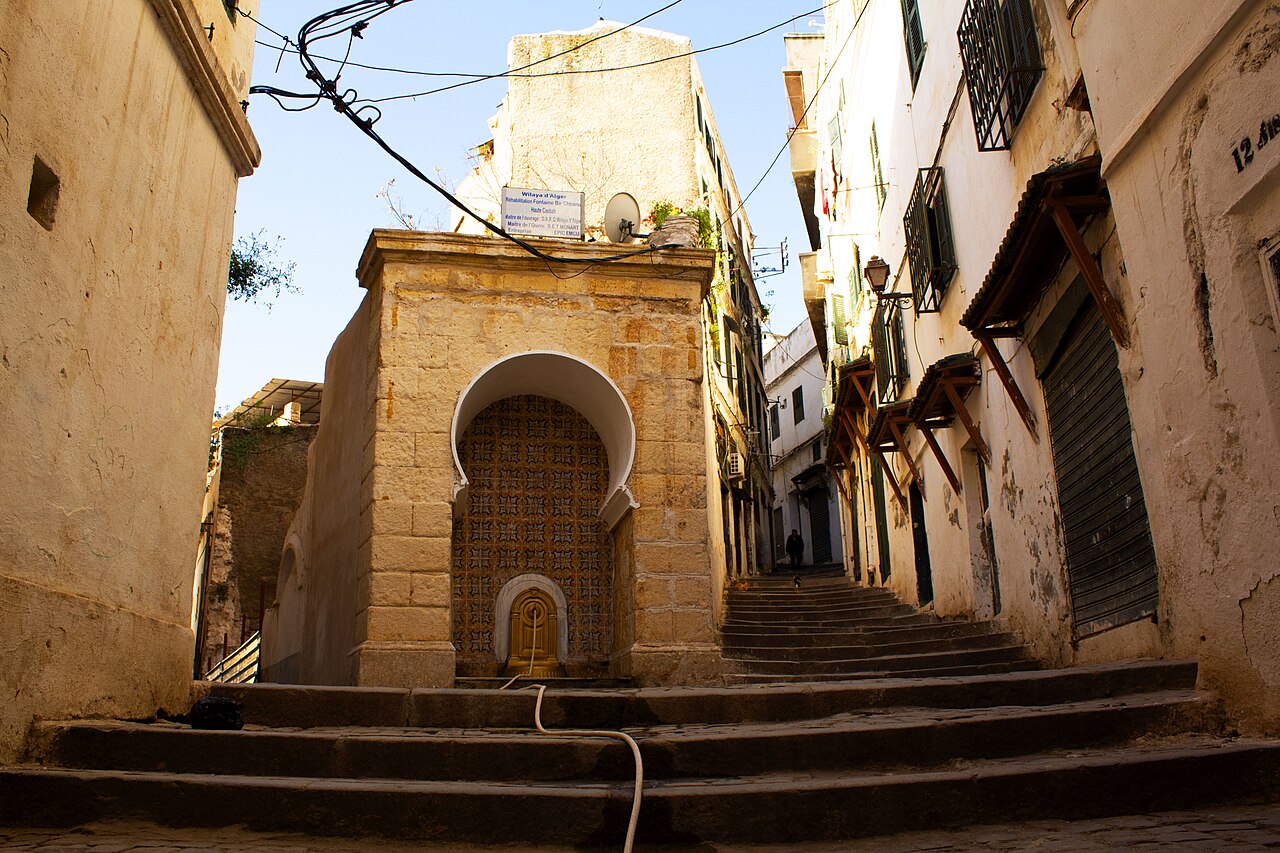
A stepped alleyway of the UNESCO-listed Casbah of Algiers, with a tiled Moorish horseshoe-arch fountain and whitewashed Ottoman houses climbing the hill under a clear sky
Algiers · a fountain in the Casbah
A cautious security state
Algeria is a strong, security-conscious state with relatively little tourism and a heavy bureaucracy. Expect checkpoints, paperwork and sensitivity around anything 'strategic' — military and police sites, government buildings, oil and gas infrastructure, and border areas. Photography of these is restricted and enforced, and public criticism of the state, the army or religion carries real risk, including under the 2024 penal code for online posts. Travel in the Sahara requires authorisation and, in practice, a licensed escort.Source: UK Foreign, Commonwealth & Development Office
Religion and the law
Islam is the state religion, and non-Muslim worship is legally restricted to licensed locations under Ordinance 06-03. Proselytising Muslims is illegal, as is distributing materials to 'shake the faith' of a Muslim. The small Christian community, concentrated among the Berbers of Kabylie, has faced church closures and prosecutions. Keep personal faith private, never draw local people into religious conversation, and do not bring in religious materials for distribution.Source: U.S. Department of State
Money, currency controls and daily practicalities
The Algerian dinar cannot be taken in or out, and you must declare foreign currency on arrival and keep the declaration for departure. Black-market money changing is illegal, even though the unofficial rate is much better — don't do it. Card acceptance is limited, so carry cash and keep it secure. French is the most useful second language, and a trusted local contact or fixer makes the bureaucracy far easier to navigate.Source: UK Foreign, Commonwealth & Development Office
The north, the Sahara and the borders
The northern cities — Algiers, Oran, Constantine — function normally and have real history and character, but there is a general terrorism risk. The long borders with Libya, Mali, Niger and Mauritania, and parts of the Tunisia border, are no-go zones. The Saharan south (Tamanrasset, Djanet) is a genuine draw, but only on an organised, authorised tour with a licensed escort. Plan around these realities and follow current government advice closely.Source: UK Foreign, Commonwealth & Development Office

The security-state, money and north/Sahara notes draw on UK FCDO travel advice for Algeria. Contains public sector information licensed under the Open Government Licence v3.0.

Reviewed 27 Oct 2026. Cross-cultural guidance authored by the mission-readiness team, awaiting review by local partners. Broad contextual tendencies that vary by individual and setting — not rules about how any person will behave.

Your readiness plan

Once you've built a plan, this becomes your personal, checkable preparation for Algeria — the same engine behind every Trefeo briefing, honest about what still needs verifying.

Personal readiness · free

Build your free plan to see what this trip asks of you.

Add your passport and the devices you'll carry — no sign-in needed — and this turns into a personal, checkable readiness plan for Algeria: entry, accounts, devices, connectivity, culture and emergency, starting at 0% until you work through it.

Sources & licences

Every fact on this page is traceable. Each section above links its own source and review date; the full list is below.

  • Freedom House viewDigital-rights research

    Algeria: Freedom in the World 2025 · © Freedom House; noncommercial use with citation, commercial by permission

  • Joshua Project viewMission research

    Algeria — people groups, languages and religions · Free to use with attribution; NON-COMMERCIAL

  • Travel Readiness EngineTrefeo editorial

    Editorial guidance (mission-readiness team)

  • U.S. Department of State viewOfficial government

    2023 Report on International Religious Freedom: Algeria · Public domain (U.S. Government work, 17 U.S.C. §105)

  • UK Foreign, Commonwealth & Development Office viewGovernment travel advisory

    Foreign travel advice: Algeria · Open Government Licence v3.0