Skip to content
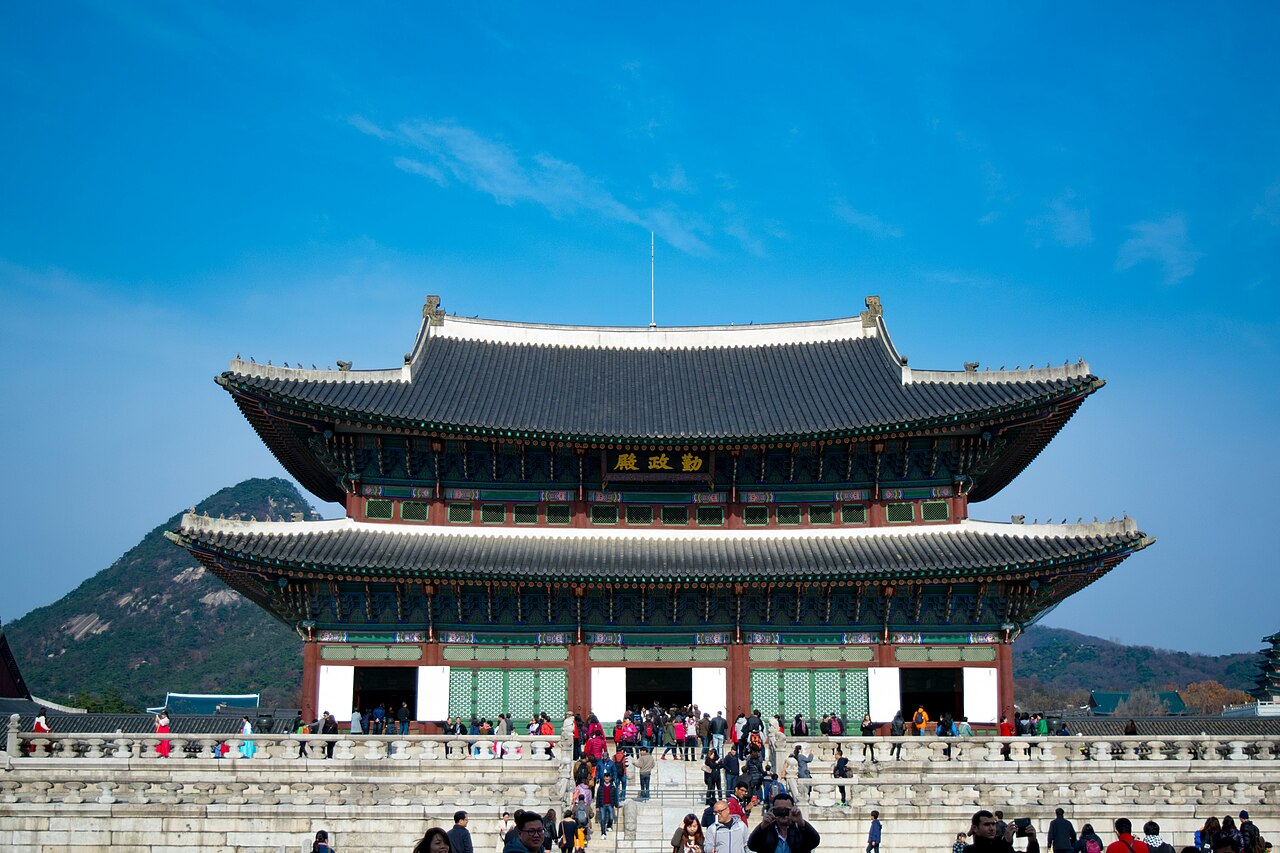
The grand Geunjeongjeon throne hall of Gyeongbokgung Palace in Seoul, with its two-tiered tiled roof and colourful dancheong painting, backed by a green mountain under a blue sky

Prepare for your trip to South Korea.

A highly developed, densely connected nation on the southern half of the Korean peninsula — from the megacity of Seoul to historic Gyeongju, the mountains and the island of Jeju. Safe, modern and fast-moving, with a vibrant culture and, unusually for the region, a large and dynamic church. Tensions with North Korea persist in the background but rarely touch daily life. Your briefing covers what changes the trip: entry by passport, staying connected, and local custom.

Free to explore. No sign-in needed.
Region
East Asia · the Korean peninsula
Capital
Seoul
Languages
Korean (official) · English (taught; limited everyday use outside tourism and business)
Entry
Depends on your passport

Travel advisory · UK Foreign, Commonwealth & Development Office

The UK FCDO does not advise against travel to South Korea, which is a safe, developed country with low crime. Tensions with North Korea persist in the background — occasional missile tests and heightened rhetoric — but rarely affect daily life; near the DMZ, follow all instructions and photography restrictions. Be aware of the typhoon season (roughly June-November) and occasional air-quality issues. This is a foreign-government advisory; check the latest advice before travel.

Reviewed 27 Oct 2026 · FCDO advice was last updated 14 May 2026 and was still current at 27 Oct 2026. There is no advise-against-travel warning; North Korea tension is a background factor rather than a daily risk.

Read the current advice

Do I need a visa for South Korea?

Most travellers enter visa-free — but with a twist: you normally need a K-ETA (Korea Electronic Travel Authorization) online before boarding. A set of major markets (including the US, UK, EU, Japan, Australia and Canada) is temporarily K-ETA-exempt through 31 December 2026; after that the K-ETA returns. Visa-free stays vary (commonly 90 days). The exact rules are in flux, so this section is provisional — confirm your status on the official K-ETA site.

Which passport will you use?

Choose your passport country, not your country of residence.

No name, passport number or document upload.

Passport not selected

Your entry context starts here

Choose a passport and this shows your real, sourced entry status for South Korea — verified, provisional or verification-required — straight from the engine.

What should I verify before I travel?
Confirm your own nationality's visa-free terms, K-ETA requirement and permitted stay on the official portal (k-eta.go.kr — beware imitation sites charging high fees) and check your own foreign ministry. The K-ETA temporary exemption expires 31 December 2026. Some nationalities need a visa in advance; Jeju Island has separate rules. The final decision on admission rests with the authorities.
Why does Trefeo show "verification required"?
Trefeo keeps sourced destination context separate from passport-specific rules that still need confirmation. Selecting a passport should never turn an unverified rule into a verified requirement, so Trefeo holds it at "verification required" until it's confirmed against an authoritative source.

The peninsula.
A strong church.
Your context.

South Korea is easy, safe and rewarding to travel — mostly visa-free (with a K-ETA), superb infrastructure, low crime — but the K-ETA rules are in flux, hierarchy and etiquette run deep, and the North looms in the background. What matters depends on your passport and where you're going, so this is built to skim.

Staying connected in South Korea

South Korea has some of the best connectivity on earth — a travel eSIM or an airport SIM/pocket Wi-Fi is easy, and free Wi-Fi is everywhere. It is rated Partly Free: some sites are blocked (notably pro-North Korean content under the National Security Law). Use Naver Map or KakaoMap (Google Maps is limited here) and KakaoTalk for messaging, and avoid North Korea-related material online.

Mobile networksSK Telecom · KT · LG U+
Getting onlineeSIM or airport SIM; use Naver Map/KakaoMap — avoid North Korea content
Digital conditions · sourced
Internet freedommoderate

South Korea is rated 'Partly Free' (65/100) in Freedom on the Net 2025. Connectivity is world-class, but some websites are blocked and the legal climate has constraints.

Online speechmoderate

Pro-North Korean content is blocked under the National Security Law, and defamation law is used against journalists. Avoid accessing or sharing North Korea-related material; keep commentary measured.

Connectivitylow

Among the best-connected countries on earth. A travel eSIM or an airport SIM/pocket Wi-Fi is easy, and free Wi-Fi is everywhere.

Personal VPNslow

VPNs are legal and usable; use one on public Wi-Fi as normal good practice.

Public Wi-Filow

Public Wi-Fi is widespread and generally safe; use a VPN for sensitive sign-ins as anywhere.

Photography and privacymoderate

Do not photograph military sites, personnel or installations, especially near the DMZ; follow signage. Elsewhere photography is unrestricted.

Digital conditions from Freedom House · reviewed 27 Oct 2026. Per-item sources shown by severity (Freedom House, UK FCDO, editorial).
Mission context

South Korea is unusual in East Asia for its large, dynamic church: roughly a third of the population is Christian, with a strong Protestant and Catholic presence and one of the world's largest missionary-sending movements. About half the population is non-religious, and Buddhism remains significant. Christianity is open, visible and well-established — the context is less 'unreached' than most of the region, though secularism among the young is rising.

People groups30 total · 13 unreached
Evangelical~16.3% (Joshua Project estimate)
Primary languageKorean
Progress levelSignificant church; secularism rising
Explore mission-focused context
Joshua Project lists 30 people groups in South Korea, 13 of them unreached (about 43%). It estimates roughly 16.3% evangelical and about 29.9% Christian adherents overall — far higher than Japan or China. The largest group by far is the Korean, estimated near 49 million.
Joshua Project

People-group figures are Joshua Project estimates, used with attribution. Complements — does not replace — dedicated research platforms. Korea has a large, missionary-sending church; the frontier here is often secular and young urban Koreans. · reviewed 27 Oct 2026.

Local customs and etiquette in South Korea

South Korea is welcoming and modern, but hierarchy, age and etiquette matter, and the pace is fast and digital. A little effort with custom and the right apps goes a long way. Read the notes that fit your trip.

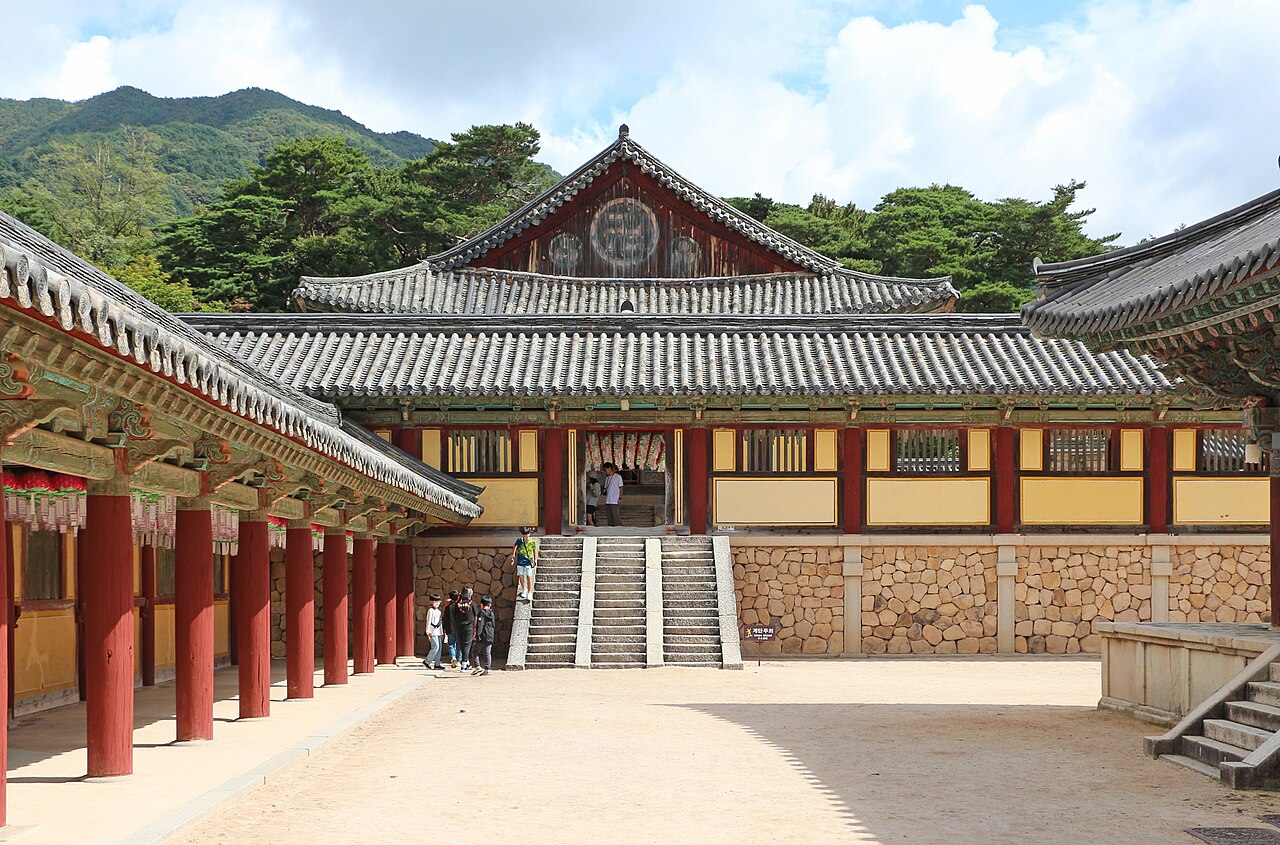
The courtyard and tiled-roof halls of Bulguksa Buddhist temple near Gyeongju, with red wooden columns and stone steps below forested mountains
Gyeongju · the halls of Bulguksa temple
Hierarchy, age and etiquette
Korean social life carries strong Confucian roots: age and seniority shape how people speak and behave, from honorific language to who pours the drinks. For visitors, a few habits cover most situations — give and receive with two hands (or support your arm), defer to elders and let the most senior set the tone, and use a slight bow as a greeting. Koreans are warm and often fast-moving; sincerity, respect for seniority and attentiveness to the group go a long way.Source: Travel Readiness Engine
A strong church in a secular, high-tech society
Unusually for East Asia, South Korea has a large and dynamic Christian population (around a third), with Protestant megachurches, a strong Catholic community and a major global missionary movement, alongside significant Buddhism and a large, growing non-religious share — especially among the young. Faith is visible and discussed openly, and churches and temples welcome respectful visitors. The 'frontier' here is often secular, urban and young rather than closed.Source: U.S. Department of State
North Korea, the DMZ and online sensitivities
Tensions with North Korea are a background reality rather than a daily danger: missile tests and rhetoric occur, but Seoul life goes on normally. Near the DMZ, follow all instructions and photography restrictions exactly. Online, pro-North Korean content is blocked under the National Security Law and is legally sensitive — don't seek out or share it. Keep political commentary measured, as defamation law can be used aggressively.Source: Freedom House
Digital, fast and app-driven
Korea is one of the most connected, app-driven societies on earth — transport, payments, maps, messaging and services all run through apps. Get a T-money transit card, use Naver Map or KakaoMap (Google Maps is limited here), KakaoTalk for messaging, and expect fast, cashless-friendly service everywhere. The pace is quick ('ppalli-ppalli'); move with the crowd and embrace the efficiency.Source: Travel Readiness Engine

The North Korea/DMZ and online-sensitivities notes draw on UK FCDO travel advice and Freedom House. Contains public sector information licensed under the Open Government Licence v3.0.

Reviewed 27 Oct 2026. Cross-cultural guidance authored by the mission-readiness team, awaiting review by local partners. Broad contextual tendencies that vary by individual and setting — not rules about how any person will behave.

Your readiness plan

Once you've built a plan, this becomes your personal, checkable preparation for South Korea — the same engine behind every Trefeo briefing, honest about what still needs verifying.

Personal readiness · free

Build your free plan to see what this trip asks of you.

Add your passport and the devices you'll carry — no sign-in needed — and this turns into a personal, checkable readiness plan for South Korea: entry, accounts, devices, connectivity, culture and emergency, starting at 0% until you work through it.

Sources & licences

Every fact on this page is traceable. Each section above links its own source and review date; the full list is below.

  • Freedom House viewDigital-rights research

    South Korea: Freedom on the Net 2025 · © Freedom House; noncommercial use with citation, commercial by permission

  • Joshua Project viewMission research

    South Korea — people groups, languages and religions · Free to use with attribution; NON-COMMERCIAL

  • Travel Readiness EngineTrefeo editorial

    Editorial guidance (mission-readiness team)

  • U.S. Department of State viewOfficial government

    2023 Report on International Religious Freedom: South Korea · Public domain (U.S. Government work, 17 U.S.C. §105)

  • UK Foreign, Commonwealth & Development Office viewGovernment travel advisory

    Foreign travel advice: South Korea · Open Government Licence v3.0