Skip to content
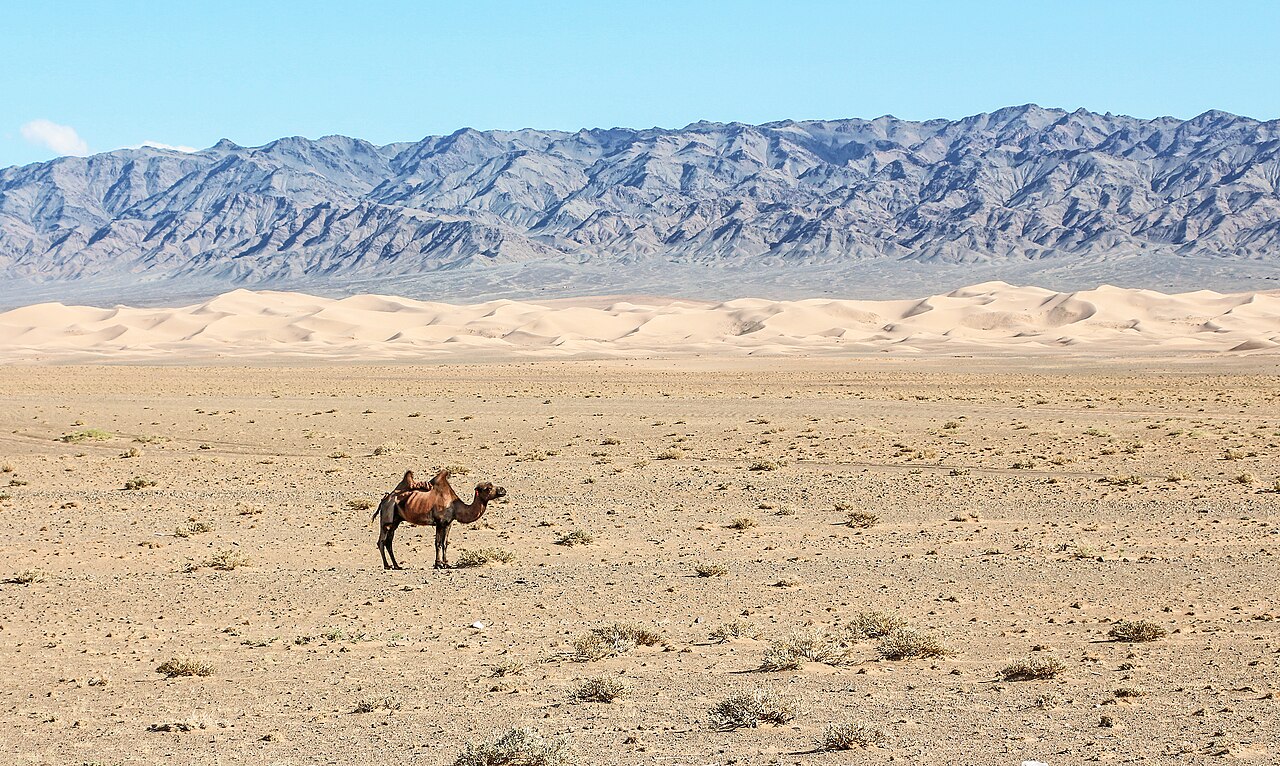
A lone two-humped Bactrian camel standing on the gravel plain of the Gobi desert, with the pale Khongoryn Els sand dunes and a dark mountain range behind under a blue sky

Prepare for your trip to Mongolia.

A vast, sparsely populated democracy between Russia and China — the land of the steppe, the Gobi desert, nomadic herders and Chinggis Khaan. Welcoming and increasingly open to visitors, with an extreme continental climate and great distances that make travel a real adventure. A small but growing church sits in a free, open society. Your briefing covers what changes the trip: entry by passport (newly expanded), staying connected across the emptiness, and nomadic custom.

Free to explore. No sign-in needed.
Region
East Asia · the steppe and the Gobi
Capital
Ulaanbaatar
Languages
Mongolian (Khalkha dialect, official) · Kazakh (minority, in the west) · Russian and English (known to some)
Entry
Depends on your passport

Travel advisory · UK Foreign, Commonwealth & Development Office

The UK FCDO does not advise against travel to Mongolia, which is generally safe. The main challenges are practical: an extreme continental climate (bitterly cold winters, big temperature swings), high altitude, vast distances with limited infrastructure for remote travel, periodic fuel-supply disruptions, petty crime in Ulaanbaatar (especially in crowds), and severe winter air pollution in the capital. Travel outside the capital needs serious preparation. This is a foreign-government advisory; check the latest advice before travel.

Reviewed 27 Oct 2026 · FCDO advice was last updated 7 Aug 2026 and was still current at 27 Oct 2026. There is no advise-against-travel warning; the dominant risks are the climate, distances and infrastructure rather than crime or unrest.

Read the current advice

Do I need a visa for Mongolia?

Mongolia has opened up: the US and South Korea are visa-free for 90 days, and the EU, UK, Australia, New Zealand and several others for 30 days under a temporary policy running through 31 December 2026 — plus more nationalities at 30/90 days. India, Kuwait and Qatar get a visa on arrival, about 100 nationalities can use an e-Visa, and others need a visa in advance. Because much of this is recent and partly temporary, this section is provisional — confirm your status.

Which passport will you use?

Choose your passport country, not your country of residence.

No name, passport number or document upload.

Passport not selected

Your entry context starts here

Choose a passport and this shows your real, sourced entry status for Mongolia — verified, provisional or verification-required — straight from the engine.

What should I verify before I travel?
Confirm your own nationality's visa-free, visa-on-arrival or e-Visa eligibility on Mongolia's MFA Consular Department site (consul.mn) and check your own foreign ministry — the temporary visa-free policy is set to expire 31 December 2026. Register with immigration if you'll stay over 30 days. Carry a passport valid at least six months. The final decision on admission rests with the authorities.
Why does Trefeo show "verification required"?
Trefeo keeps sourced destination context separate from passport-specific rules that still need confirmation. Selecting a passport should never turn an unverified rule into a verified requirement, so Trefeo holds it at "verification required" until it's confirmed against an authoritative source.

The steppe.
An open democracy.
Your context.

Mongolia is safe, friendly and rewarding — much of it visa-free now, an open internet, legendary hospitality — but the climate is extreme, distances are enormous, and the countryside asks for serious preparation. What matters depends on your passport and where you're going, so this is built to skim.

Staying connected in Mongolia

Mongolia is rated Free, with an open internet and no censorship to plan around. Ulaanbaatar and towns have good 4G/5G (Mobicom, Unitel, Skytel) and a local SIM or eSIM is easy — but coverage disappears fast in the countryside. The real 'digital' task here is preparing for no signal: carry offline maps, a power bank, and ideally a satellite messenger for remote travel.

Mobile networksMobicom · Unitel · Skytel
Getting onlineSIM/eSIM in towns; signal vanishes in the countryside — carry offline maps & sat-comms
Digital conditions · sourced
Internet freedomlow

Mongolia is rated 'Free' (84/100) in Freedom in the World 2025 — a democracy with a generally open internet and media.

Online speechlow

Online speech is largely free, though defamation and 'false information' laws have occasionally been used against journalists. No political censorship to plan around.

Connectivitymoderate

Ulaanbaatar and towns have good 4G/5G coverage (Mobicom, Unitel, Skytel); a local SIM or eSIM is easy. Coverage thins fast in the countryside — carry offline maps and, for remote trips, a satellite communicator.

Personal VPNslow

VPNs are legal and usable; use one on public Wi-Fi as normal good practice.

Public Wi-Filow

Wi-Fi is common in Ulaanbaatar hotels and cafes; use a VPN for sensitive sign-ins as anywhere.

Remote travel commsmoderate

For the Gobi, the steppe and remote areas, plan for no mobile signal: carry offline maps, a power bank, and ideally a satellite messenger, and share your itinerary.

Digital conditions from Freedom House · reviewed 27 Oct 2026. Per-item sources shown by severity (Freedom House, UK FCDO, editorial).
Mission context

Mongolia is historically Tibetan Buddhist and shamanist, with a large non-religious population and a Kazakh Muslim minority in the west. It is unusual as a place where the church has grown from almost nothing before 1990 to a small but established presence today, in an open, democratic environment. Engagement is legal and relatively free, though still sensitive; relationships, cultural fluency and care for a young national church matter.

People groups25 total · 17 unreached
Evangelical~1.3% (Joshua Project estimate)
Primary languageMongolian
Progress levelSmall but growing church since 1990
Explore mission-focused context
Joshua Project lists 25 people groups in Mongolia, 17 of them unreached (about 68%). It estimates roughly 1.3% evangelical and about 2.3% Christian adherents overall. The largest group by far is the Khalkha Mongol, estimated near 2.5 million, alongside Kazakh, Buryat and other groups.
Joshua Project

People-group figures are Joshua Project estimates, used with attribution. Complements — does not replace — dedicated research platforms. Mongolia has an open environment and a young national church; engagement is relational and mindful of local believers. · reviewed 27 Oct 2026.

Local customs and etiquette in Mongolia

Mongolia runs on nomadic hospitality and a deep bond with the land. There's real etiquette around the ger (yurt) and sacred sites, and respect, sincerity and preparation go a long way. Read the notes that fit your trip.

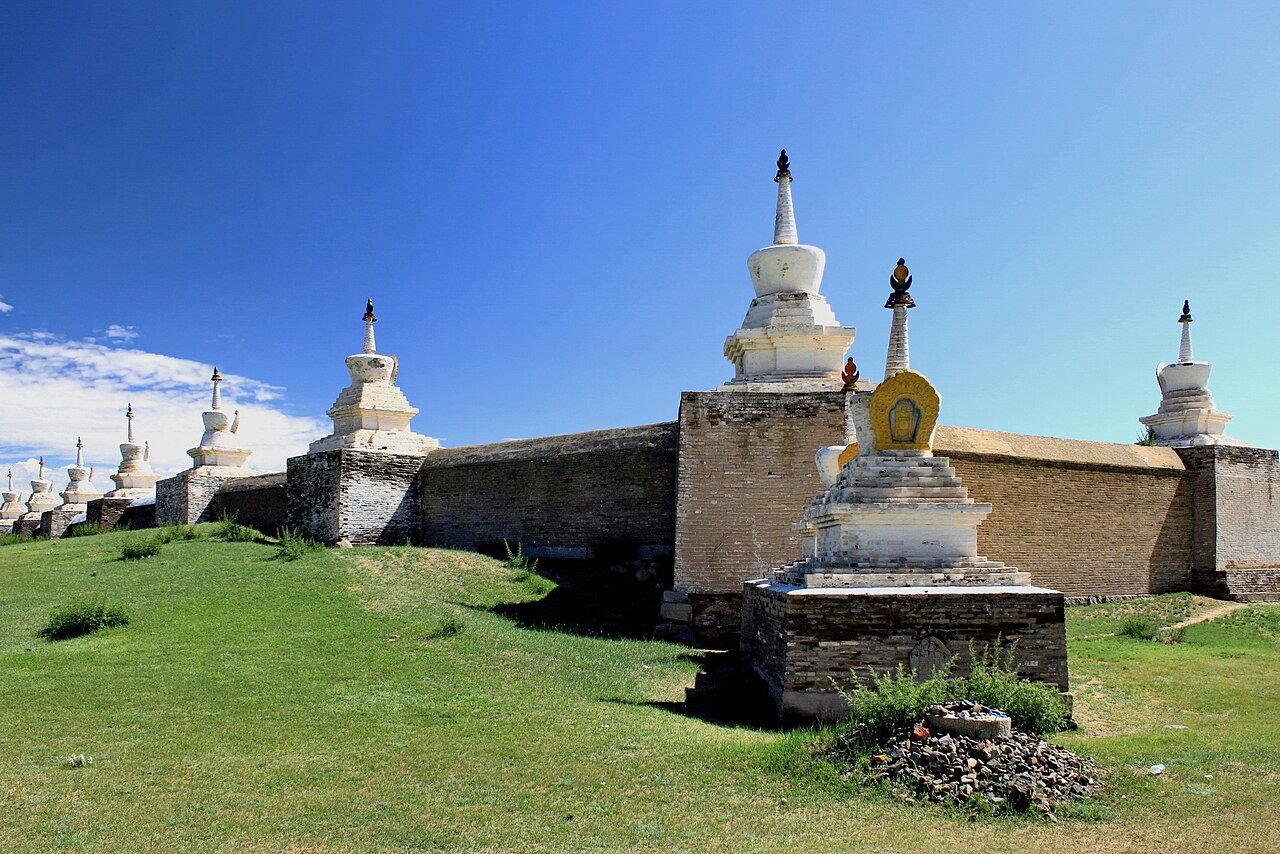
The white stupas along the ancient brick wall of Erdene Zuu, Mongolia's oldest Buddhist monastery, at Kharkhorin, with green grass and a blue sky
Kharkhorin · the stupas of Erdene Zuu monastery
Nomadic hospitality and ger etiquette
Hospitality is central to Mongolian culture: out on the steppe, travellers are welcomed into gers, offered tea, dairy foods and airag, and helped without question. There is etiquette to match — enter with the right foot, move clockwise, don't step on the threshold, don't point your feet at the fire or altar, and accept what you're offered (at least a taste). Receive and give with the right hand, bring a small gift, and let your guide steer you. Honest effort is warmly received.Source: Travel Readiness Engine
The climate, the distances and real preparation
Mongolia is an adventure that demands respect for the environment. Winters are brutally cold, temperatures swing hugely, altitude is significant, and distances are vast with little infrastructure between settlements — fuel can be scarce and roads rough or absent. Travel outside Ulaanbaatar means reputable operators, proper vehicles and supplies, offline maps, backup communications (a satellite messenger for remote areas) and a shared itinerary. Underpreparing is the main danger here, not crime.Source: UK Foreign, Commonwealth & Development Office
Buddhism, shamanism and an open, young church
Tibetan Buddhism and traditional shamanism shape Mongolian custom — monasteries, prayer flags, and ovoo cairns on hills and passes (walk clockwise around them and add a stone). A large share of Mongolians are non-religious, and since the democratic opening of 1990 a small Christian church has grown in a relatively free environment. Treat sacred sites respectfully, keep personal faith discreet in sensitive settings, and be mindful of a young national church in anything you do.Source: U.S. Department of State

The climate and preparation note draws on UK FCDO travel advice for Mongolia. Contains public sector information licensed under the Open Government Licence v3.0.

Reviewed 27 Oct 2026. Cross-cultural guidance authored by the mission-readiness team, awaiting review by local partners. Broad contextual tendencies that vary by individual and setting — not rules about how any person will behave.

Your readiness plan

Once you've built a plan, this becomes your personal, checkable preparation for Mongolia — the same engine behind every Trefeo briefing, honest about what still needs verifying.

Personal readiness · free

Build your free plan to see what this trip asks of you.

Add your passport and the devices you'll carry — no sign-in needed — and this turns into a personal, checkable readiness plan for Mongolia: entry, accounts, devices, connectivity, culture and emergency, starting at 0% until you work through it.

Sources & licences

Every fact on this page is traceable. Each section above links its own source and review date; the full list is below.

  • Freedom House viewDigital-rights research

    Mongolia: Freedom in the World 2025 · © Freedom House; noncommercial use with citation, commercial by permission

  • Joshua Project viewMission research

    Mongolia — people groups, languages and religions · Free to use with attribution; NON-COMMERCIAL

  • Travel Readiness EngineTrefeo editorial

    Editorial guidance (mission-readiness team)

  • U.S. Department of State viewOfficial government

    2023 Report on International Religious Freedom: Mongolia · Public domain (U.S. Government work, 17 U.S.C. §105)

  • UK Foreign, Commonwealth & Development Office viewGovernment travel advisory

    Foreign travel advice: Mongolia · Open Government Licence v3.0