Skip to content
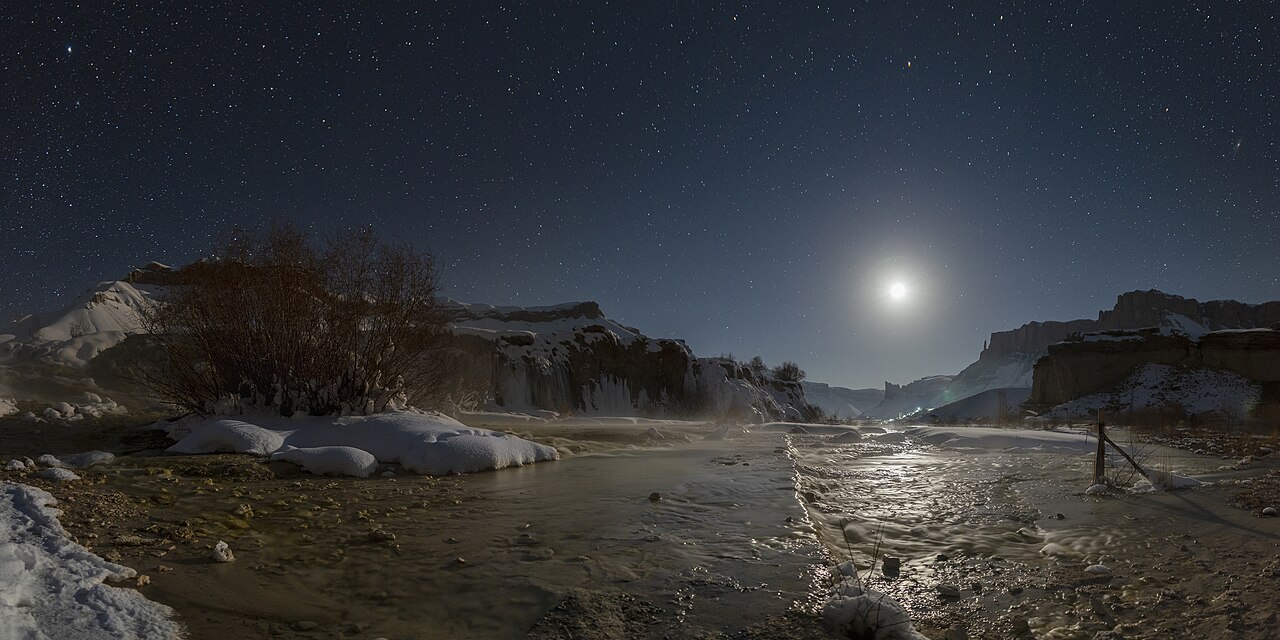
The travertine dams and still water of Band-e Amir in the Afghan highlands by moonlight, snow on the ground and a starry sky above the cliffs

Prepare for your trip to Afghanistan.

A land of deep history and striking landscapes — the blue lakes of Band-e Amir, the Hindu Kush, the tilework of Mazar-i-Sharif, the ruins of ancient Balkh — living through a severe humanitarian and rights crisis under Taliban rule since 2021. Governments, including the UK FCDO, advise against all travel to the whole country; there is no in-country consular support, and foreign nationals face a real risk of detention and kidnapping. This briefing is orientation to verify and to take seriously — not encouragement to travel.

Free to explore. No sign-in needed.
Region
Central Asia · the Hindu Kush
Capital
Kabul
Languages
Dari (Persian) (official) · Pashto (official) · Uzbek, Turkmen, Balochi and others
Entry
Depends on your passport

Travel advisory · UK Foreign, Commonwealth & Development Office

The UK FCDO advises against all travel to Afghanistan. It warns that British nationals face a heightened risk of arbitrary detention — which can lead to months or years of imprisonment — and a high risk of kidnapping, that terrorists target places frequented by foreign nationals, and that there is no British Embassy in Afghanistan and consular support in person is not possible. The security situation is volatile, including tensions on the Afghanistan–Pakistan border. This is a foreign-government advisory covering the whole country; conditions can change quickly.

Reviewed 10 Sept 2026 · FCDO advice was last updated 30 Jul 2026 and advises against all travel, emphasising detention and kidnapping risk and the absence of in-country consular support. Conditions change rapidly — verify before any travel.

Read the current advice

Do I need a visa for Afghanistan?

A visa is required and must be arranged in advance — entry and exit are difficult, many missions are closed, and travel is strongly advised against. Authorities may ask for a polio-vaccination certificate, and there are strict limits on carrying cash across airports and land borders. Above all, governments advise against all travel and there is no in-country consular support. Choose the passport you'll travel with and this section adjusts to you.

Which passport will you use?

Choose your passport country, not your country of residence.

No name, passport number or document upload.

Passport not selected

Your entry context starts here

Choose a passport and this shows your real, sourced entry status for Afghanistan — verified, provisional or verification-required — straight from the engine.

What should I verify before I travel?
A visa must be obtained in advance; confirm any current process, your eligibility and the permitted stay with the relevant authorities and your own foreign ministry, and expect requirements to be unreliable and to change without notice. Carry copies of your passport and visa. There is no British Embassy in Afghanistan and in-person consular support is not possible — your government's ability to help you is extremely limited. The overriding official advice is against all travel; the final decision on admission rests with the authorities controlling the area.
Why does Trefeo show "verification required"?
Trefeo keeps sourced destination context separate from passport-specific rules that still need confirmation. Selecting a passport should never turn an unverified rule into a verified requirement, so Trefeo holds it at "verification required" until it's confirmed against an authoritative source.

An ancient land.
An extreme now.
Your context.

Afghanistan holds extraordinary heritage and hospitality, but it is in acute crisis, with sweeping restrictions — especially on women and girls — pervasive insecurity, and no outside help available if things go wrong. Conditions differ by area and change quickly. What matters depends entirely on the current security picture, so this is built to skim — and to read alongside current, area-specific advice and the judgement of trusted local partners.

Staying connected in Afghanistan

Mobile networks (such as Afghan Wireless, Roshan, Etisalat and MTN) have historically covered the main centres, but connectivity is fragile, controlled and surveilled: media and online expression are tightly suppressed, access can be cut or degraded, and women's access to the internet and public life has been sharply curtailed. Do not rely on mobile or internet access for safety-critical communication; agree offline fallbacks with trusted contacts before any travel.

Mobile networksAfghan Wireless · Roshan · Etisalat · MTN
Getting onlineFragile, controlled & monitored — plan offline fallbacks
Digital conditions · sourced
Internet freedomhigh

Among the most repressive environments (Afghanistan is rated 'Not Free', 6/100, in Freedom in the World). Under Taliban rule, media and expression are tightly suppressed.

Restrictions & shutdownshigh

Authorities restrict media and online expression, and connectivity can be cut or degraded; women's access to education, work and public life has been sharply curtailed. Do not rely on connectivity for safety-critical communication.

Surveillance & online speechhigh

Criticism of the authorities is prohibited and dangerous; assume networks and devices are monitored and that online activity carries severe risk.

Personal VPNsmoderate

Availability and legality of tools shift and use can draw suspicion — prefer an organization-approved provider configured before arrival, and verify current conditions.

Public Wi-Fihigh

Treat all networks as untrusted and monitored; avoid sensitive sign-ins entirely.

Photography of sensitive siteshigh

Avoid photographing military, security, checkpoint and government locations and armed personnel entirely; this is acutely dangerous.

Digital conditions from Freedom House · reviewed 10 Sept 2026. Per-item sources shown by severity (Freedom House, UK FCDO, editorial).
Mission context

Afghan society is overwhelmingly Muslim, tribal and community-mediated, and ethnically diverse (Pashtun, Tajik, Hazara, Uzbek and others). Under Taliban rule, religious practice outside the official interpretation is severely constrained and any engagement carries extreme risk for locals and visitors alike; almost no non-Muslim community remains.

People groups58 total · 58 unreached · 51 frontier
Evangelical~0% (Joshua Project estimate)
Primary languagesDari (Persian) · Pashto
Progress levelLevel 1 — unreached
Explore mission-focused context
Joshua Project lists 58 people groups in Afghanistan — it classifies all of them as unreached, with 51 as 'frontier'. It estimates the population at effectively 0% Christian adherent and 0% evangelical, at the lowest progress level. The population is ethnically diverse, with Pashtun and Tajik the largest groups.
Joshua Project

People-group figures are Joshua Project estimates, used with attribution. Complements — does not replace — dedicated research platforms. · reviewed 10 Sept 2026.

Local customs and etiquette in Afghanistan

Afghanistan is famously hospitable and deeply traditional, but under Taliban rule public life is tightly constrained — with severe restrictions especially on women — and politics, religion and security are dangerous subjects. Read these notes carefully, take every security and movement decision from trusted local partners, and never create risk for the people you meet.

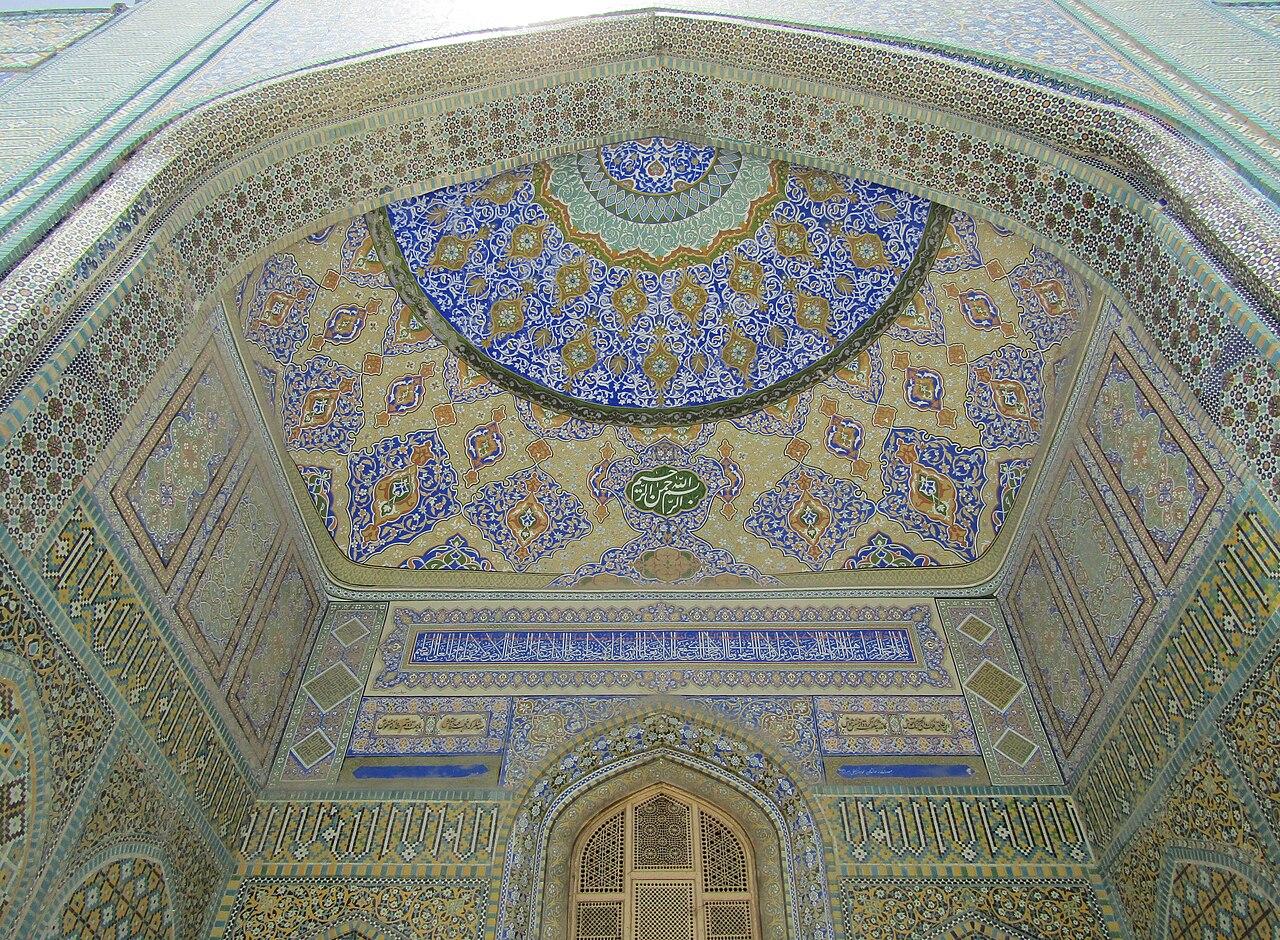
The intricately tiled iwan of the Shrine of Hazrat Ali (the Blue Mosque) in Mazar-i-Sharif, its vault covered in blue, gold and turquoise Persian patterns and calligraphy
Mazar-i-Sharif · the tilework of the Shrine of Hazrat Ali
Local context
Afghanistan is overwhelmingly Muslim, tribal and community-mediated, and under Taliban rule since 2021 a strict interpretation of Islam governs public life. Restrictions are severe — especially on women's dress, movement, education and work — and deviation, dissent or proselytising is dangerous. Governments advise against all travel, foreign nationals face a real detention and kidnapping risk, and there is no in-country consular help. Conditions differ by area and change quickly; take every security and movement decision from trusted local partners, and never create risk for the people you meet.Source: UK Foreign, Commonwealth & Development Office
Hospitality and communication
Afghan hospitality — melmastia — is famously generous even amid hardship, and in private, communication is warm and relationship-first. In public it is extremely guarded: tribal identity and honour are central, and politics, security and religion are dangerous to discuss. Learn a few words of Dari or Pashto, invest in trusted relationships, read the room carefully, and be acutely careful never to put a host or contact at risk.Source: Travel Readiness Engine
Gender and legal restrictions
The authorities impose severe restrictions on women's dress, movement, education and work, and enforce strict segregation. Understand and respect the legal restrictions: women travellers face acute constraints, mixing between unrelated men and women is heavily policed, and any engagement with women must be extremely careful and locally guided. Dress and conduct conservatively at all times, and follow local partners' judgement without exception.Source: UK Foreign, Commonwealth & Development Office
Religion, photography and safety
A strict interpretation of Islam governs public life; never proselytise (it is extremely dangerous) and avoid anything that could be read as religious or political dissent. Photography is acutely dangerous — do not photograph people, women, security, checkpoints, military or government subjects, and assume any camera use draws suspicion. Detention, kidnapping, terrorism and crossfire are real risks and outside help is unavailable, so follow trusted local partners' security judgement without exception.Source: UK Foreign, Commonwealth & Development Office

Local context, the gender and legal restrictions, photography and the detention and kidnapping warnings draw on UK FCDO travel advice for Afghanistan. Contains public sector information licensed under the Open Government Licence v3.0.

Reviewed 10 Sept 2026. Cross-cultural guidance authored by the mission-readiness team, awaiting review by local partners. Broad contextual tendencies that vary by community and area — not rules about how any person will behave — and cannot substitute for current, area-specific security advice in an extreme environment.

Your readiness plan

Once you've built a plan, this becomes your personal, checkable preparation for Afghanistan — the same engine behind every Trefeo briefing, honest about what still needs verifying.

Personal readiness · free

Build your free plan to see what this trip asks of you.

Add your passport and the devices you'll carry — no sign-in needed — and this turns into a personal, checkable readiness plan for Afghanistan: entry, accounts, devices, connectivity, culture and emergency, starting at 0% until you work through it.

Sources & licences

Every fact on this page is traceable. Each section above links its own source and review date; the full list is below.

  • Freedom House viewDigital-rights research

    Afghanistan: Freedom in the World 2025 · © Freedom House; noncommercial use with citation, commercial by permission

  • Joshua Project viewMission research

    Afghanistan — people groups, languages and religions · Free to use with attribution; NON-COMMERCIAL

  • Travel Readiness EngineTrefeo editorial

    Editorial guidance (mission-readiness team)

  • U.S. Department of State viewOfficial government

    2023 Report on International Religious Freedom: Afghanistan · Public domain (U.S. Government work, 17 U.S.C. §105)

  • UK Foreign, Commonwealth & Development Office viewGovernment travel advisory

    Foreign travel advice: Afghanistan · Open Government Licence v3.0