Skip to content
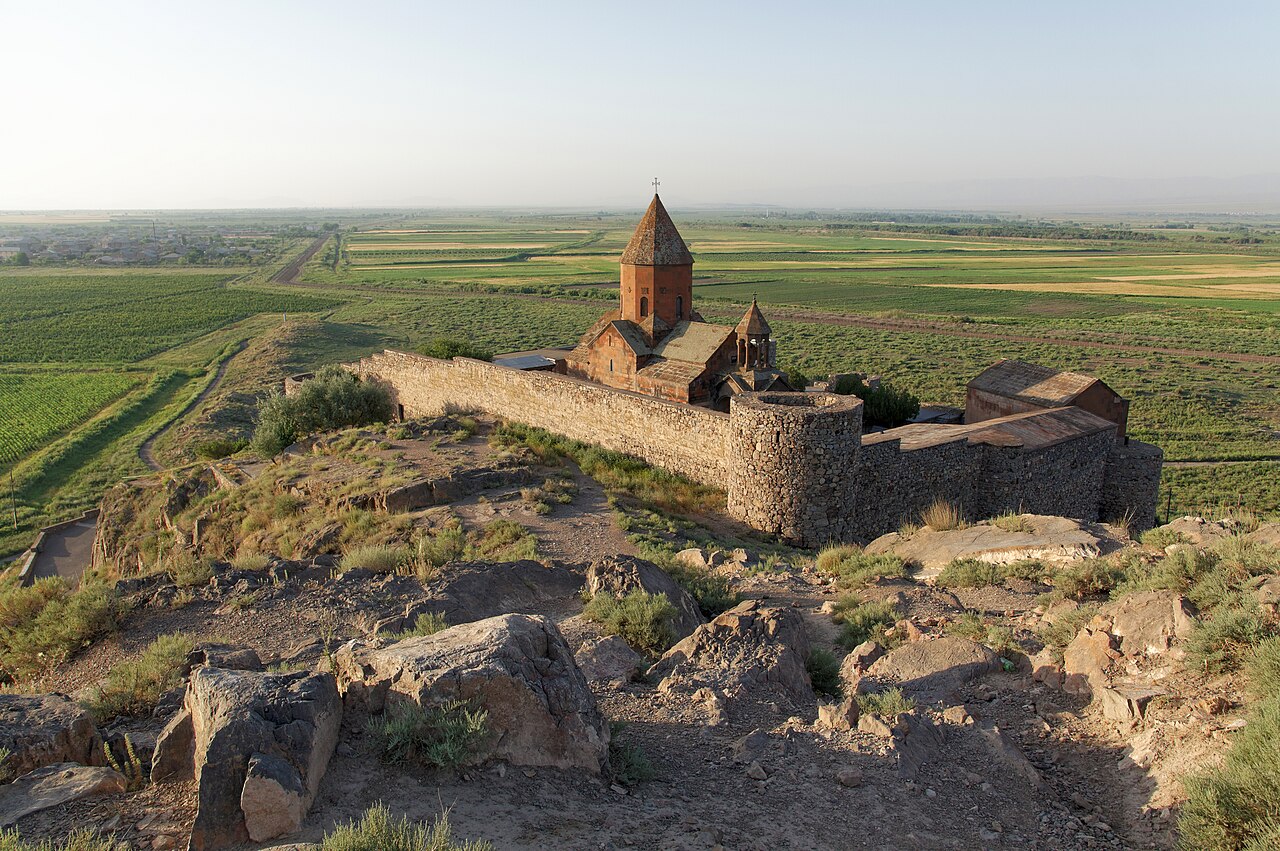
The red-stone Khor Virap monastery with its conical dome, standing on a rocky knoll above the green Ararat plain in Armenia, with Mount Ararat's range on the hazy horizon

Prepare for your trip to Armenia.

A landlocked, mountainous nation in the South Caucasus — and the first country in the world to adopt Christianity as a state religion, back in 301 AD. Ancient monasteries, the symbol of Mount Ararat on the skyline, and the lively capital Yerevan sit alongside deep hospitality and profound historical memory: the 1915 Genocide, and the recent, raw loss of Nagorno-Karabakh. Welcoming and very open to visitors (visa-free for most). Your briefing covers what changes the trip: entry by passport, staying connected, and Armenian custom and history.

Free to explore. No sign-in needed.
Region
Caucasus · the world's first Christian nation
Capital
Yerevan
Languages
Armenian (official; its own unique alphabet, created in the 5th century) · Russian (widely spoken as a second language) · Yazidi/Kurdish and Assyrian (minorities)
Entry
Depends on your passport

Travel advisory · UK Foreign, Commonwealth & Development Office

The UK FCDO does not advise against travel to most of Armenia, including Yerevan, which is generally safe with low violent crime. It DOES advise against all travel to within 5km of the entire eastern border with Azerbaijan (closed) and along the M16/H26 road between Ijevan and Noyemberyan, because of border tensions. Armenia is living with the aftermath of the 2023 loss of Nagorno-Karabakh (a large displaced population) and continuing uncertainty with Azerbaijan; away from the border, practical risks are mountain weather, driving and occasional demonstrations in Yerevan. This is a foreign-government advisory; check the latest advice before travel.

Reviewed 27 Oct 2026 · FCDO advice was last updated 1 Mar 2026 and was still current at 27 Oct 2026. The firm restriction is the 5km eastern-border strip and the Ijevan-Noyemberyan road; elsewhere, including Yerevan and the main sites, the dominant concerns are mountain/driving conditions and the regional situation rather than crime.

Read the current advice

Do I need a visa for Armenia?

Armenia is very open: citizens of about 63 countries — the EU/EFTA, UK, US, Australia, New Zealand, Japan, South Korea, the Gulf states, the CIS states, Georgia, China, Iran and more — can enter and stay VISA-FREE for up to 180 days a year (verified against the Armenian MFA's official lists). Others apply for an e-Visa online (evisa.mfa.am) or get a visa on arrival, and a small set of nationalities are invitation-only.

Which passport will you use?

Choose your passport country, not your country of residence.

No name, passport number or document upload.

Passport not selected

Your entry context starts here

Choose a passport and this shows your real, sourced entry status for Armenia — verified, provisional or verification-required — straight from the engine.

What should I verify before I travel?
Confirm your own nationality's 180-day visa-free status, or e-Visa / visa-on-arrival eligibility, on the Armenian MFA (mfa.am / evisa.mfa.am). Continuous stays beyond 180 days a year can incur fines. Carry a valid passport. The final decision on admission rests with the authorities.
Why does Trefeo show "verification required"?
Trefeo keeps sourced destination context separate from passport-specific rules that still need confirmation. Selecting a passport should never turn an unverified rule into a verified requirement, so Trefeo holds it at "verification required" until it's confirmed against an authoritative source.

The mountains.
The first Christian nation.
Your context.

Armenia is warm, affordable and deeply rewarding — visa-free for most, an ancient Christian heritage, legendary hospitality — but it carries real grief and a tense, closed eastern border to avoid. What matters depends on your passport and where you're going, so this is built to skim.

Staying connected in Armenia

Armenia has a cheap, fast and comparatively open internet — among the freer environments in the region, with no routine censorship of major platforms. Yerevan and towns have good 4G/5G (Team, Ucom, Viva-MTS) and a local SIM or eSIM is easy and inexpensive with a passport. Signal thins in the mountains, and you should never rely on connectivity near the closed eastern border, which should be avoided entirely.

Mobile networksTeam (Beeline) · Ucom · Viva-MTS
Getting onlineCheap SIM/eSIM with a passport; signal thins in the mountains
Digital conditions · sourced
Internet freedomlow

Armenia's internet is comparatively open — among the freer environments in the region, with notable improvement since the 2018 democratic transition and no routine political censorship of major platforms (Freedom in the World 2025 rates the country overall Partly Free).

Online speechlow

Online speech is largely free; the main sensitivities are the Azerbaijan conflict and security matters rather than everyday censorship. Be thoughtful about border and military topics.

Connectivitylow

Good, affordable 4G/5G in Yerevan and towns (Team/Beeline, Ucom, Viva-MTS) and widespread Wi-Fi; a local SIM or eSIM is cheap and easy with a passport. Coverage thins in the mountains.

Personal VPNslow

VPNs are legal and freely usable; use one on public Wi-Fi as normal good practice.

Public Wi-Filow

Wi-Fi is common in hotels, cafes and transport; use a VPN for sensitive sign-ins as anywhere.

Mountain & border commsmoderate

Signal drops in remote mountain areas; carry offline maps and a power bank, and never rely on connectivity near the eastern border strip, which should be avoided entirely.

Digital conditions from Freedom House · reviewed 27 Oct 2026. Per-item sources shown by severity (Freedom House, UK FCDO, editorial).
Mission context

Armenia is one of the few strongly Christian nations in this part of the world — the first state to adopt Christianity (301 AD), and still around 92% Christian adherents, with the Apostolic Church woven into national identity. The Armenian people are largely reached; the main unreached peoples are minorities such as the Yazidis, Kurds and Persians. Engagement is open and legal, but the central place of the Apostolic Church means relationships, humility and deep respect for Armenian Christian heritage and history matter greatly.

People groups10 total · 3 unreached · 2 frontier
Evangelical~9.3% (Joshua Project estimate)
Primary languageArmenian
Progress levelThe first Christian nation; minorities least-reached
Explore mission-focused context
Joshua Project lists 10 people groups in Armenia, 3 of them unreached (2 of those frontier). It estimates roughly 9.3% evangelical and about 92% Christian adherents overall. The largest group, the Armenians, is considered largely reached; the least-reached peoples are the Yazidis (Armenia's largest minority), Kurds and Persians.
Joshua Project

People-group figures are Joshua Project estimates, used with attribution. Complements — does not replace — dedicated research platforms. Armenia is the world's first Christian nation and largely reached; the least-reached are minority peoples (Yazidis, Kurds, Persians). Engagement is relational and respectful of a deep Christian heritage. · reviewed 27 Oct 2026.

Local customs and etiquette in Armenia

Armenia runs on warm hospitality, an ancient Apostolic Christian faith, and a deep sense of history — the 1915 Genocide and the recent loss of Karabakh among it. There's etiquette around churches and the table, and real sensitivity needed on history and the conflict. Read the notes that fit your trip.

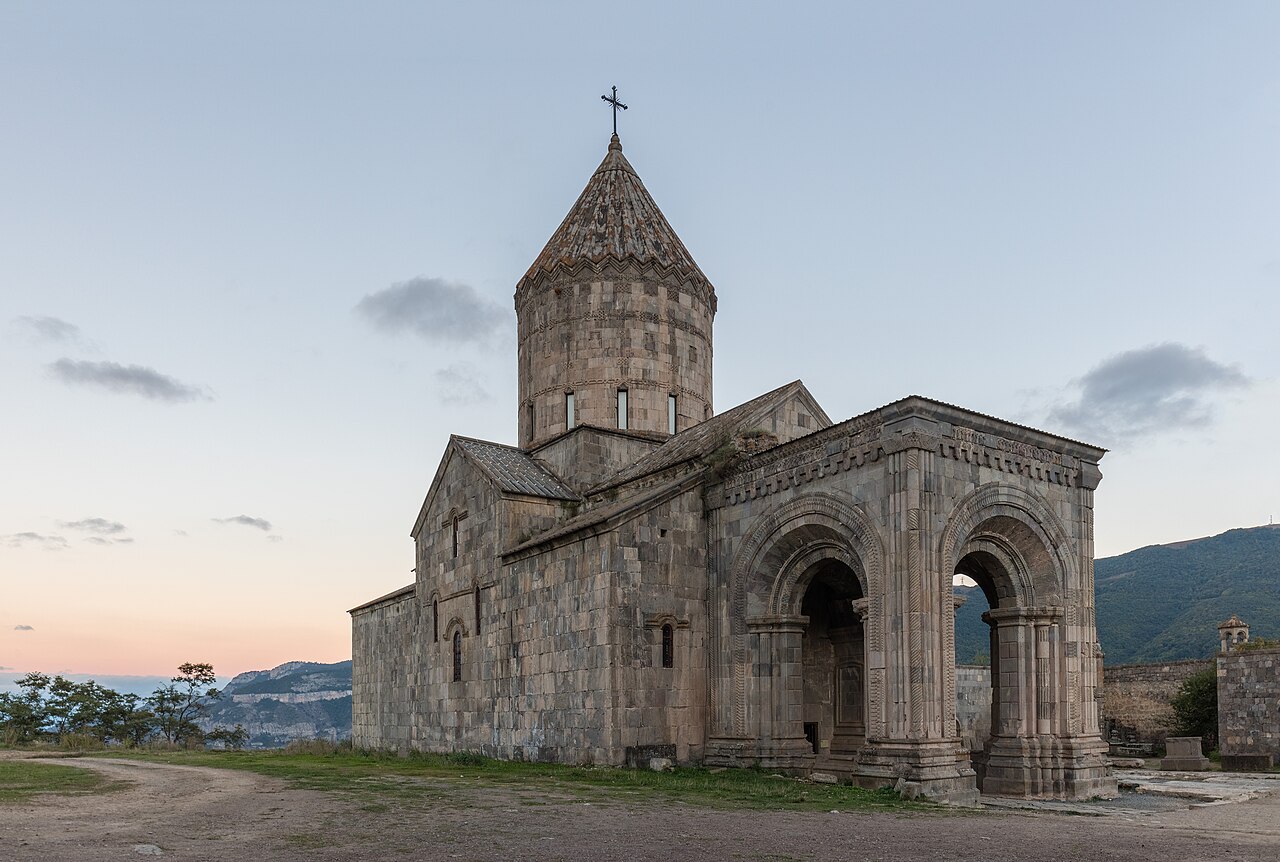
The medieval Tatev Monastery in Armenia at dusk: a grey stone church with a conical dome topped by a cross and an arched entrance gavit, set against mountains
Tatev · a medieval Armenian monastery
The world's first Christian nation
Armenia was the first state in the world to adopt Christianity as its official religion — traditionally in 301 AD, under King Tiridates III through St Gregory the Illuminator (imprisoned for years in the pit at Khor Virap before the king's conversion). The Armenian Apostolic Church has shaped the language, alphabet, art and identity of the nation ever since, and its ancient monasteries — Khor Virap, Geghard, Tatev, Noravank, the mother see at Etchmiadzin — are living places of worship. Dress modestly to enter (cover shoulders and knees, women cover their heads), keep quiet and respectful, light a candle if you wish, and ask before photographing people or services. Respect for this heritage is the foundation of any relationship in Armenia.Source: U.S. Department of State
Hospitality, the table and Armenian pride
Armenians are famously hospitable and proud of their culture. Expect to be welcomed generously — tables of lavash, herbs, barbecue, fruit, wine and brandy, with heartfelt toasts. Armenia is one of the oldest winemaking regions on earth (the Areni-1 cave holds a ~6,100-year-old winery) and Armenian brandy is a national point of pride. Accept hospitality graciously, pace yourself through the toasts, praise the food, and bring a small gift; genuine interest in Armenian history and faith is the warmest currency of all.Source: Travel Readiness Engine
Two griefs: the Genocide and Karabakh
Armenian national feeling is shaped by profound loss. The 1915 Armenian Genocide is remembered deeply — a visit to the Tsitsernakaberd memorial in Yerevan is meaningful and respectful. More recently, the 2023 loss of Nagorno-Karabakh displaced a large population and remains a raw, present grief, alongside continuing tension with Azerbaijan and a closed, sensitive eastern border (avoid the 5km strip). Approach all of this with compassion: let Armenians lead on how these things are spoken of, listen more than you opine, and avoid glib political judgements. These are living, personal realities for the people you'll meet.Source: UK Foreign, Commonwealth & Development Office

The border-situation note draws on UK FCDO travel advice for Armenia. Contains public sector information licensed under the Open Government Licence v3.0.

Reviewed 27 Oct 2026. Cross-cultural guidance authored by the mission-readiness team, awaiting review by local partners. Broad contextual tendencies that vary by individual and setting — not rules about how any person will behave.

Your readiness plan

Once you've built a plan, this becomes your personal, checkable preparation for Armenia — the same engine behind every Trefeo briefing, honest about what still needs verifying.

Personal readiness · free

Build your free plan to see what this trip asks of you.

Add your passport and the devices you'll carry — no sign-in needed — and this turns into a personal, checkable readiness plan for Armenia: entry, accounts, devices, connectivity, culture and emergency, starting at 0% until you work through it.

Sources & licences

Every fact on this page is traceable. Each section above links its own source and review date; the full list is below.

  • Freedom House viewDigital-rights research

    Armenia: Freedom on the Net 2025 · © Freedom House; noncommercial use with citation, commercial by permission

  • Joshua Project viewMission research

    Armenia — people groups, languages and religions · Free to use with attribution; NON-COMMERCIAL

  • Travel Readiness EngineTrefeo editorial

    Editorial guidance (mission-readiness team)

  • U.S. Department of State viewOfficial government

    2023 Report on International Religious Freedom: Armenia · Public domain (U.S. Government work, 17 U.S.C. §105)

  • UK Foreign, Commonwealth & Development Office viewGovernment travel advisory

    Foreign travel advice: Armenia · Open Government Licence v3.0